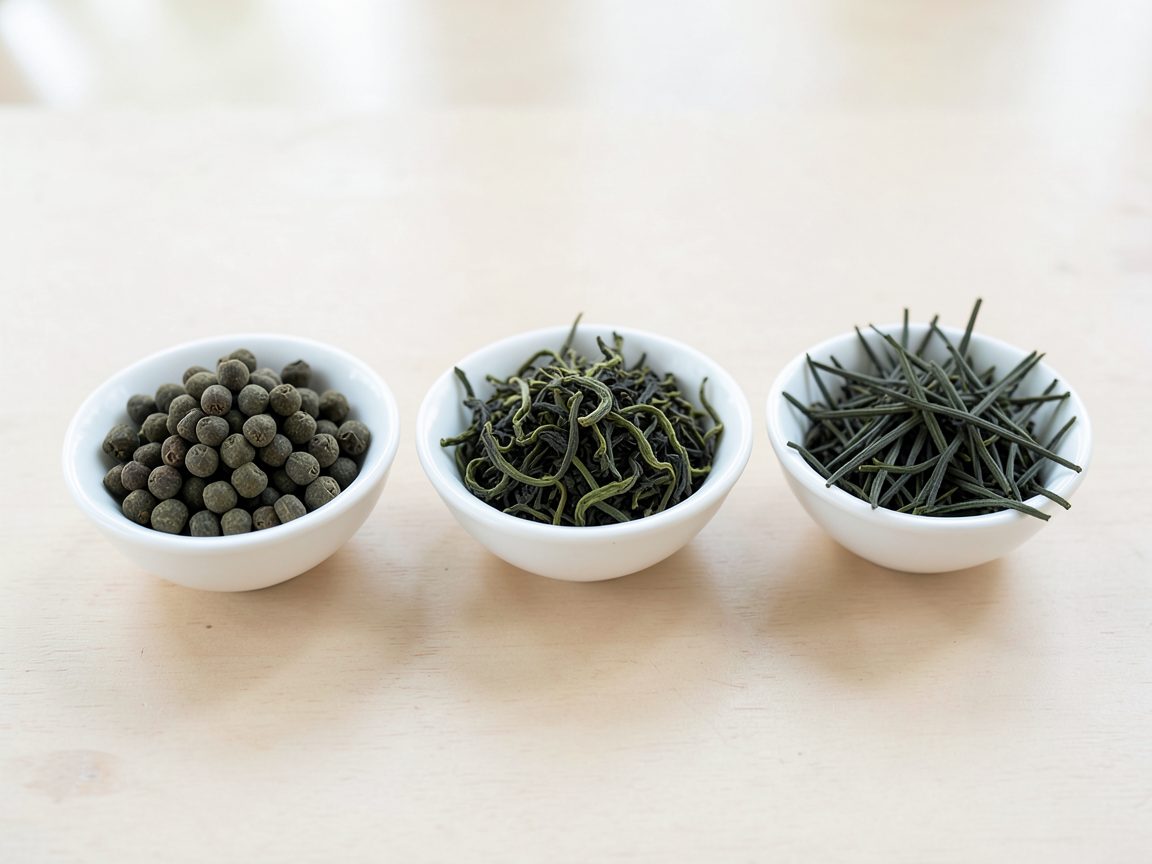
Ask most people about Ceylon tea and they'll picture a strong cup of black tea. But Sri Lanka also makes green tea.
The Sri Lanka Tea Board's history timeline records that production and export of green tea began in 1982, and Wikipedia's article on tea production in Sri Lanka states that the two types produced are gunpowder and sencha.
- Same plant as black tea — Camellia sinensis
- Not oxidised: no withering and oxidation as for black tea
- Sri Lanka: green tea production since 1982
- Styles made: gunpowder and sencha
- Typical brewing: 61–87 °C, 30 seconds–3 minutes (Wikipedia)
Green tea vs black tea
Green and black tea both come from Camellia sinensis. Wikipedia's green tea article describes green tea as made from leaves and buds that have not undergone the withering and oxidation process that creates oolong and black teas. The leaf is heated early — steamed or pan-fired — to stop oxidation. See The Types of Tea Explained.
Sri Lanka's green tea styles
| Style | How it's made (Wikipedia) |
|---|---|
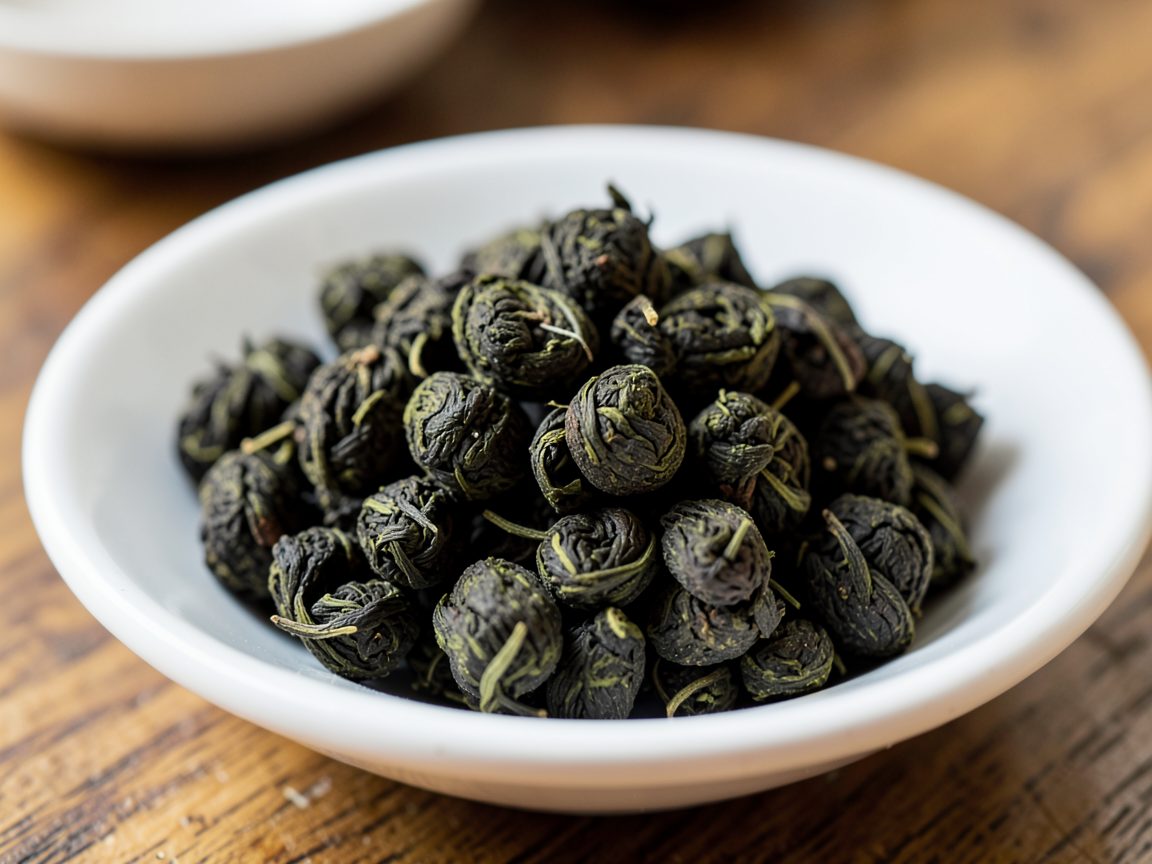
| Gunpowder | Each leaf rolled into a small pellet; heat-fixed by pan-firing, which may add a slight smokiness |
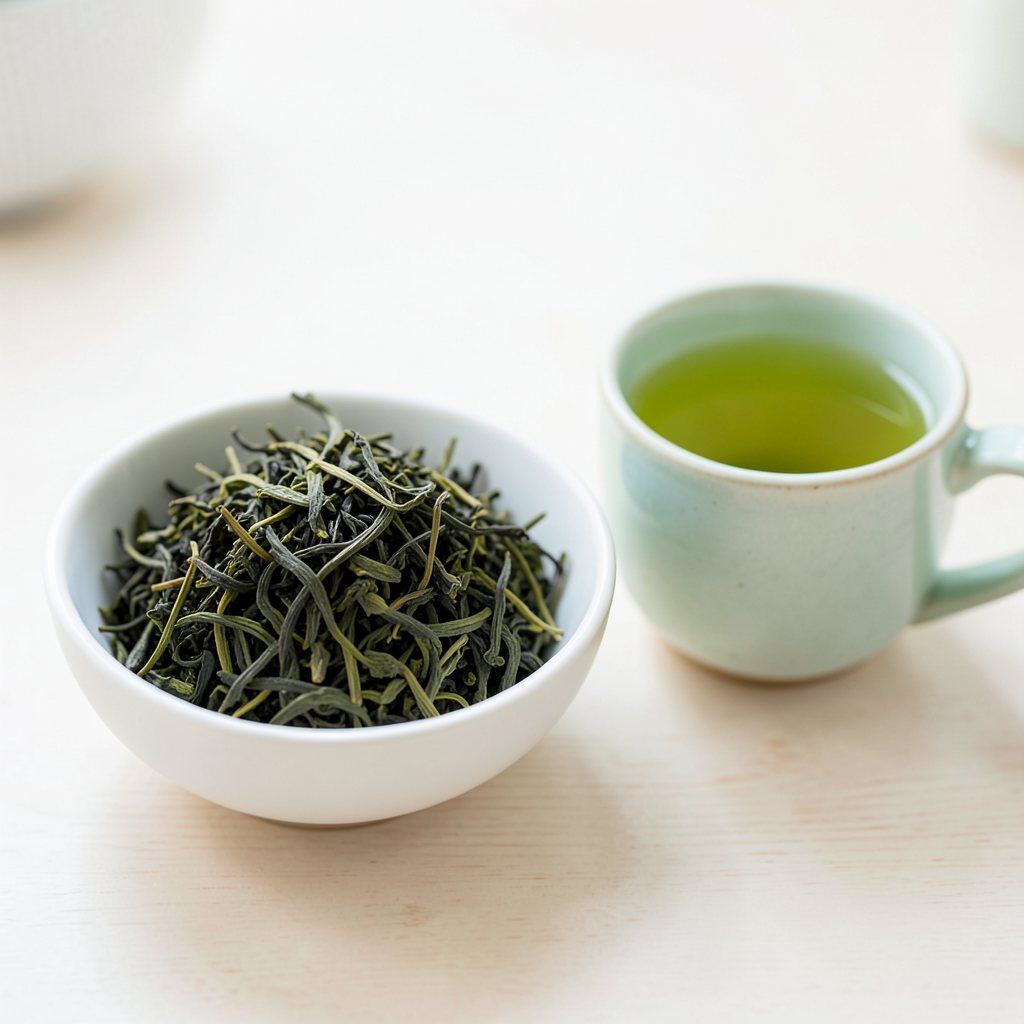
| Sencha | A Japanese style: steamed, then rolled into thin cylindrical leaves |
The Sri Lanka Tea Board also describes gunpowder as a green tea "rolled very tightly into small pellets". Read Gunpowder Green Tea and Green Tea Types.
What's in a cup of green tea?
- Caffeine: US Department of Agriculture figures quoted by Wikipedia give about 29 mg per 240 ml cup of green tea, compared with 47 mg for black tea — though amounts vary widely. See Caffeine in Tea.
- Catechins: green tea contains polyphenols such as EGCG. Wikipedia states these "collectively have no proven biological effects in humans".
- Theanine: an amino acid found in tea — see L-Theanine.
How to brew green tea
Wikipedia's green tea article gives typical guidelines:
- Amount: about 2 g of tea per 100 ml of water, or about 1 teaspoon per 150 ml cup.
- Temperature: 61–87 °C.
- Time: 30 seconds to three minutes.
- Re-steeping: higher-quality teas are often steeped cooler and shorter, but multiple times (two or three).
Steeping too hot or too long releases excessive tannins, giving a bitter, astringent brew. Warming the pot first also helps. Individual products may give different directions — for example, some Ceylon green tea packs recommend hotter water — so check your pack and adjust to taste.
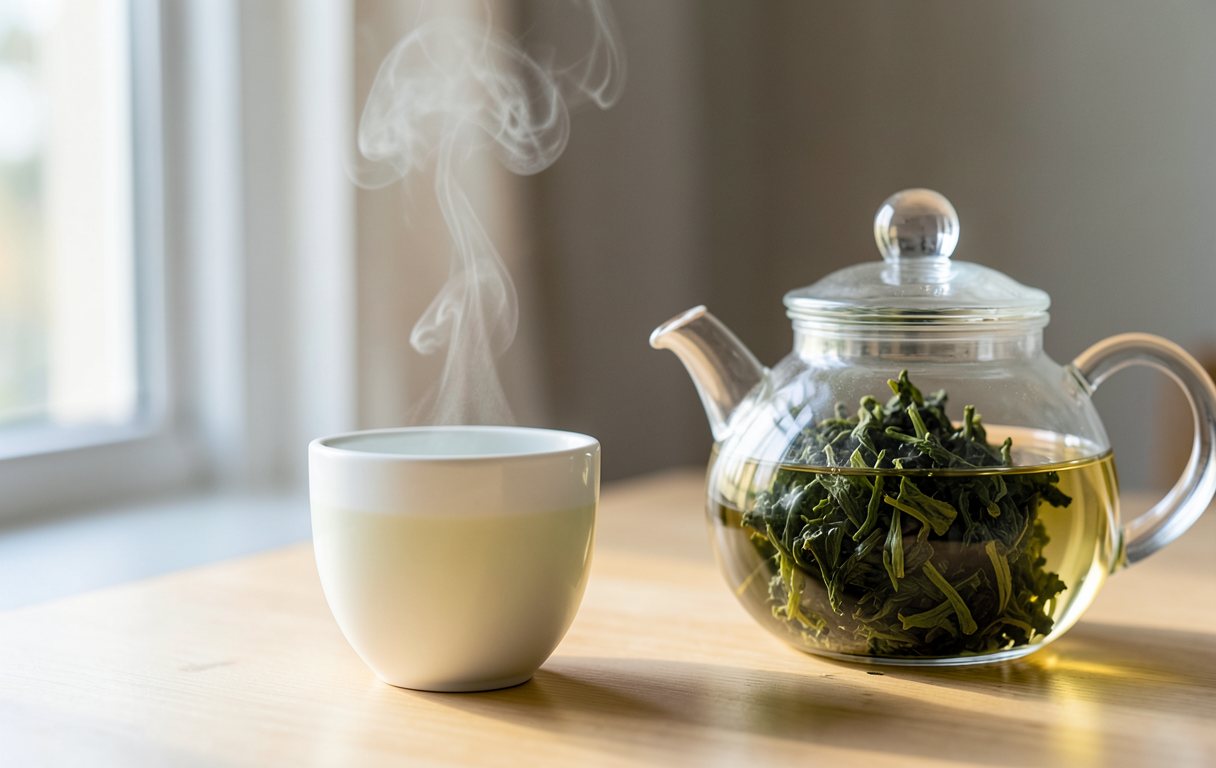
No thermometer?
Boil the kettle and let it stand for a few minutes, or use a kettle with temperature settings.
Storing green tea
Wikipedia notes that green tea usually loses its flavour within a year. Store it airtight, away from heat, light and moisture — see How to Store Tea.