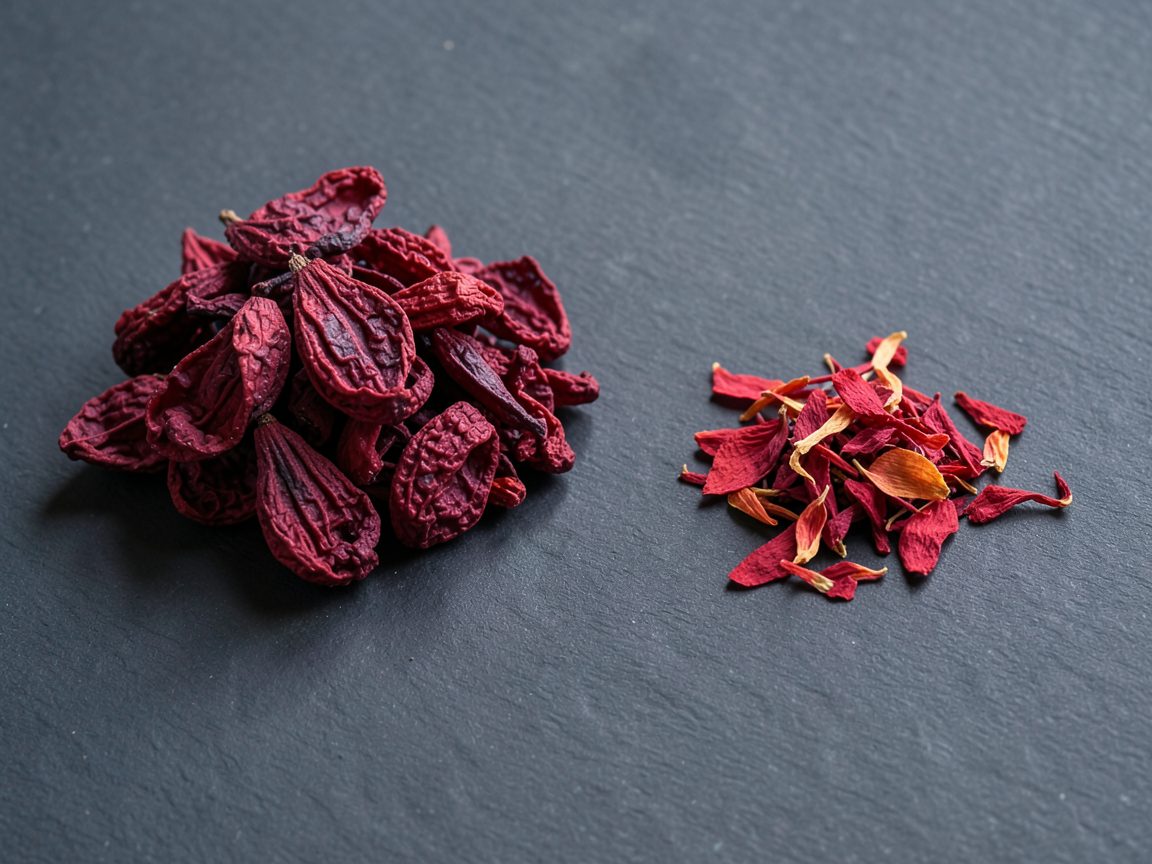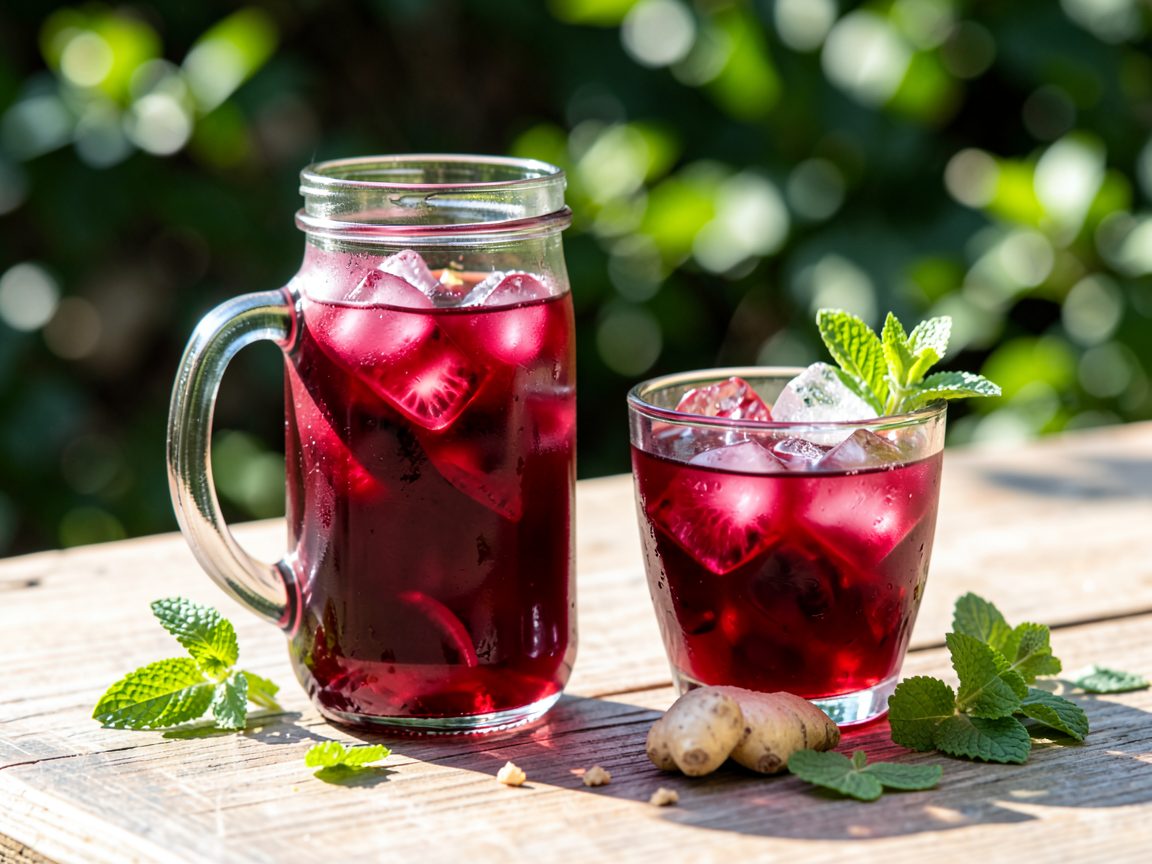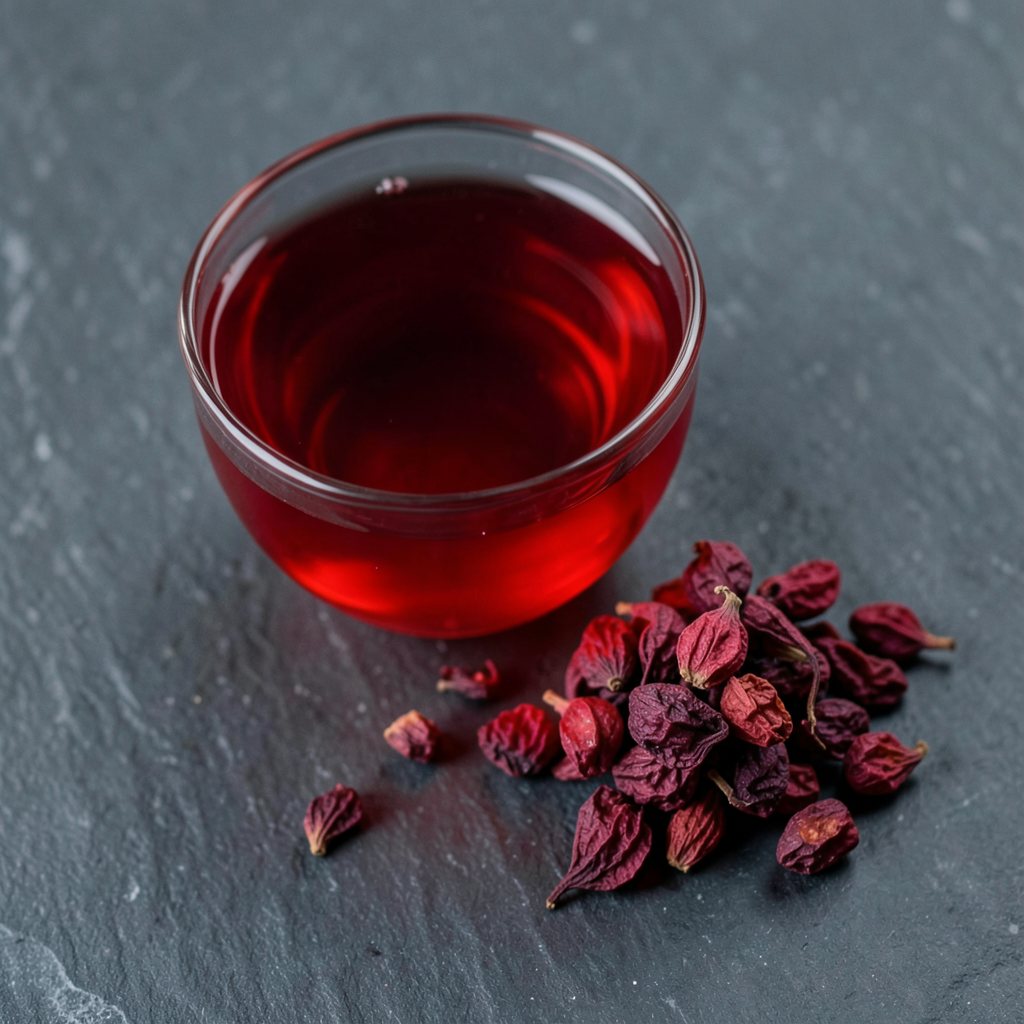
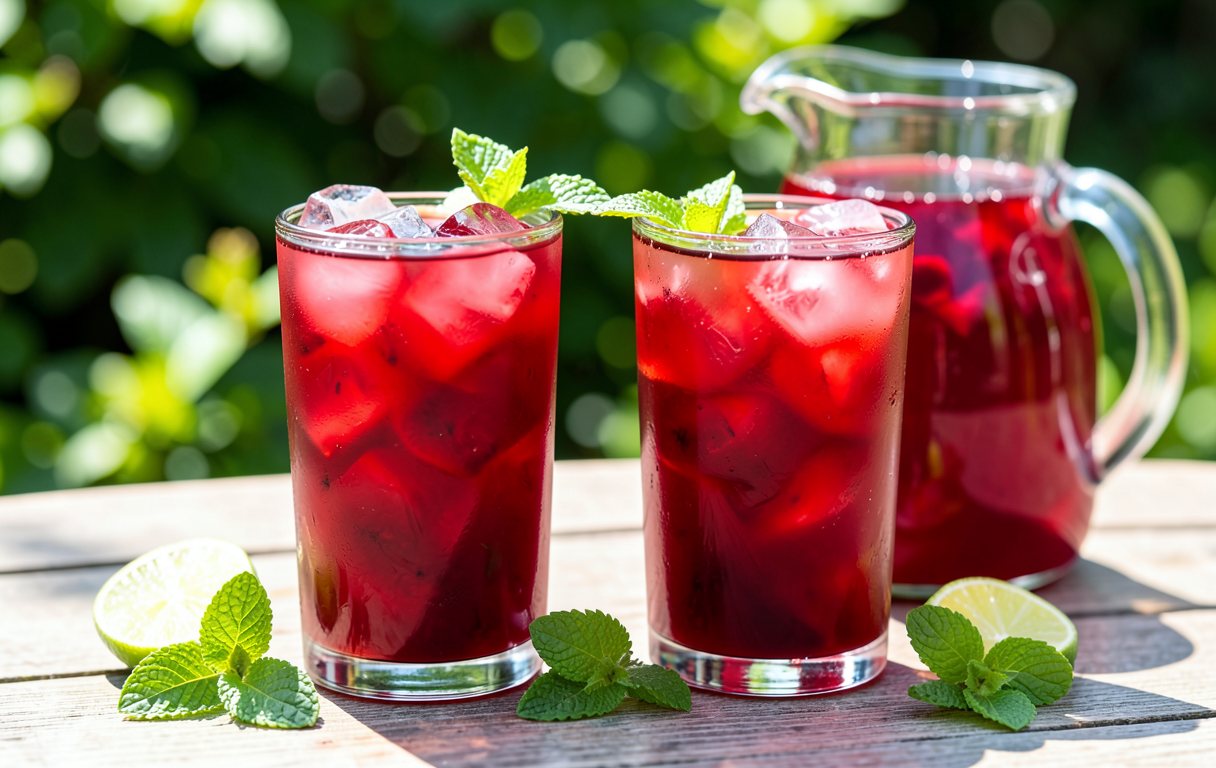
Few drinks are as striking as hibiscus tea. Steep a spoonful of dried crimson calyces and you get a jewel-red drink with a tart, cranberry-like flavour.
This article draws on Wikipedia's articles on hibiscus tea and roselle, and a peer-reviewed review of the research.
- Plant: roselle, Hibiscus sabdariffa
- Part used: the calyces (sepals), not the petals
- Caffeine: none (herbal infusion)
- Taste: tart, strong, cranberry-like
- Colour: from anthocyanins
What is hibiscus tea?
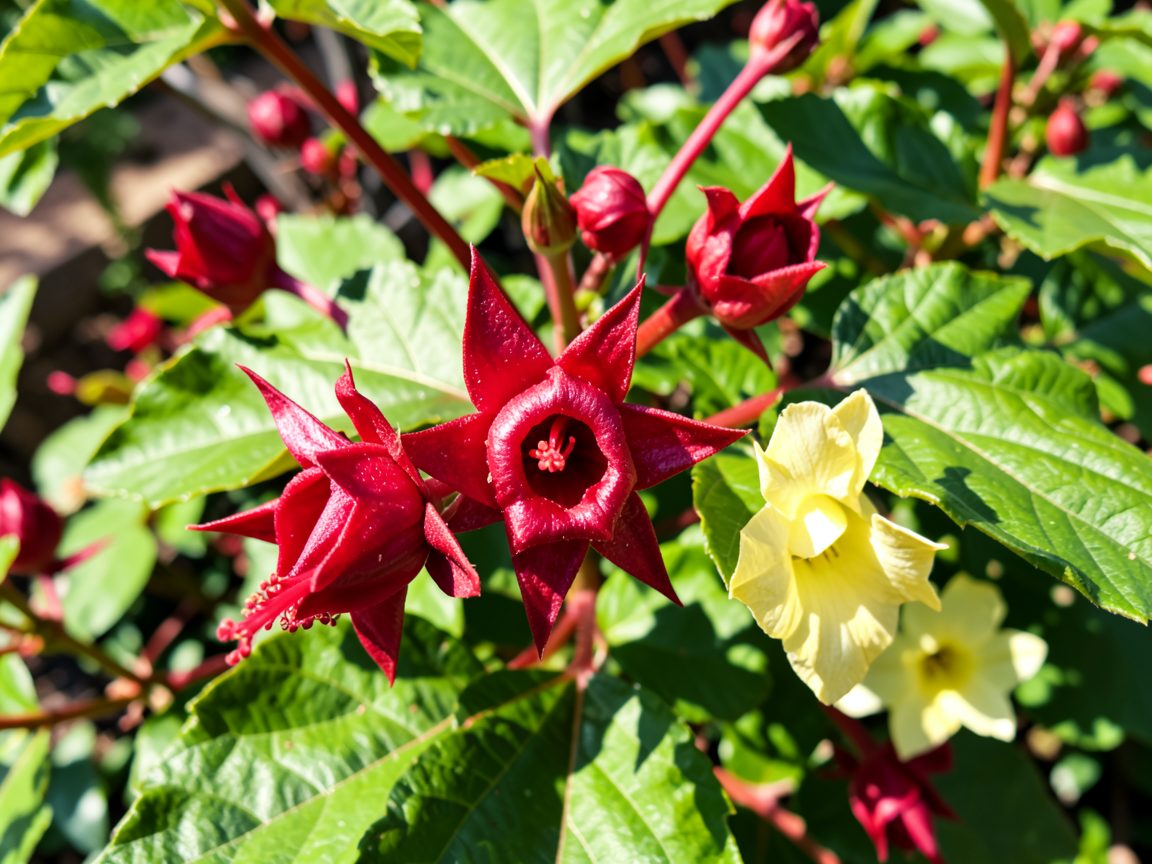
Wikipedia describes hibiscus tea as an infusion made from the crimson or deep magenta sepals, or calyces, of the roselle flower, Hibiscus sabdariffa. It is consumed hot or cold. The calyx becomes fleshy and deep crimson as the fruit matures.
In Australia, where roselle is naturalised, it is known as rosella (Wikipedia). Some products sold as hibiscus tea use the flowers of a different plant, Hibiscus × rosa-sinensis — see Two Hibiscus Teas.
One flower, many names
| Region | Name | How it's enjoyed (Wikipedia) |
|---|---|---|
| Egypt & Sudan | Karkadé | Served hot or chilled; weddings are traditionally toasted with it |
| Mexico & Central America | Agua de Jamaica | Chilled, as an agua fresca |
| Caribbean | Sorrel | With sugar, often spiced; a Christmas tradition in Jamaica |
| West Africa | Bissap, zobo, sobolo | Usually sweetened and chilled |
| Australia | Rosella | The local name for the plant |
More in Hibiscus Drinks of the World.
What does it taste like?
Wikipedia describes the flavour as tart, strong and cranberry-like, and notes it can be served with mint, orange or ginger. The plant contains organic acids and flavonoids, particularly anthocyanins, which provide the purple-red colour. Many people add a little honey or sugar.
What does the research say?
Hibiscus has been studied for its effect on blood pressure, with mixed conclusions:
- A 2022 systematic review and meta-analysis in Nutrition Reviews (Ellis et al.) pooled 17 trials and found hibiscus lowered systolic blood pressure by about 7 mmHg compared with placebo, with the largest effect in people whose blood pressure was raised. Results varied a lot between trials.
- Wikipedia's roselle article reports that a 2021 Cochrane review concluded the evidence is insufficient to establish whether roselle is effective in managing or lowering blood pressure in people with hypertension.
- Both call for more well-designed studies.
How to brew hibiscus tea
Hot
Hibiscus product packs typically recommend boiling water (100 °C) and a steep of 3–5 minutes — one tea bag per cup, or 1–2 teaspoons of loose hibiscus per 200 ml. Follow the directions on your pack.
Iced & cold
- Iced: brew hot, then chill or pour over ice. In West Africa and Thailand, Wikipedia notes, hibiscus is commonly served sweetened and cold.
- Cold brew: Wikipedia's herbal tea article notes that brewing with cold water takes much longer, usually several hours. Keep it refrigerated.
Frequently asked questions
Does hibiscus tea contain caffeine?
Hibiscus is a herbal infusion, and Wikipedia notes most herbal teas do not naturally contain caffeine. Check the label of blends, which may include black or green tea.
Is rosella the same as hibiscus tea?
In Australia, rosella is the local name for roselle, Hibiscus sabdariffa — the plant most hibiscus tea is made from.
Can I drink hibiscus tea every day?
If you are healthy and enjoy it, it can be part of a varied diet. If you take medication — especially for blood pressure — or are pregnant, check with your doctor first.
Sources & further reading
- Wikipedia: Hibiscus tea
- Wikipedia: Roselle (plant) — including the 2021 Cochrane review
- Ellis LR, et al. A systematic review and meta-analysis of the effects of Hibiscus sabdariffa on blood pressure and cardiometabolic markers. Nutrition Reviews, 2022.
- Wikipedia: Herbal tea