According to Wikipedia's article on cinnamon, Ceylon cinnamon (Cinnamomum verum) is considered "true cinnamon" — but most cinnamon in international commerce comes from other species, more correctly called cassia.
Here is how the two differ, drawing on Wikipedia, the US National Center for Complementary and Integrative Health and Germany's Federal Institute for Risk Assessment (BfR).
- True cinnamon: Cinnamomum verum (syn. C. zeylanicum)
- Cassia: C. cassia, C. burmanni, C. loureiroi
- Sri Lanka: produces 80–90% of the world's C. verum
- Ceylon quills: many thin layers; cassia is harder
- Coumarin: high in cassia, traces in Ceylon
Two very different "cinnamons"
- Ceylon cinnamon — Cinnamomum verum, also called C. zeylanicum, native to Sri Lanka. Wikipedia's Cinnamomum verum article states Sri Lanka still produces 80–90% of the world's supply.
- Cassia — mainly C. burmanni (Indonesian), C. cassia (Chinese) and C. loureiroi (Saigon/Vietnamese) cinnamon.
How to tell them apart
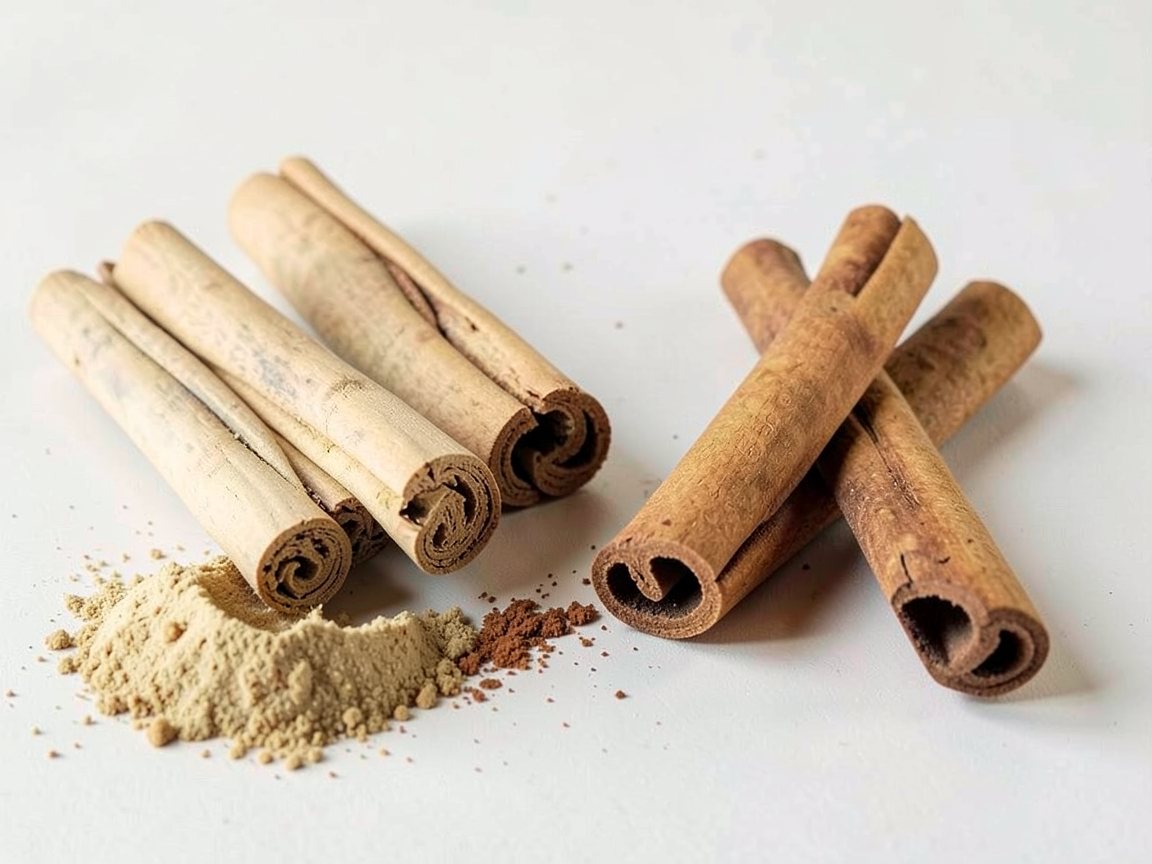
Wikipedia notes that the barks "are easily distinguished when whole":
| Ceylon cinnamon | Cassia | |
|---|---|---|
| Bark used | Only the thin inner bark | All layers of bark (Chinese cassia 2–3 mm thick) |
| Quills | Many thin layers | Indonesian: neat quills of one thick layer; Chinese and Saigon: broken pieces of thick bark |
| Colour & texture | Lighter brown; finer, less dense and more crumbly | Chinese cassia: medium to light reddish-brown, hard and woody |
| Grinding | Easily ground in a spice grinder | Much harder; thick quills can damage a grinder |
| Flavour | Subtle and more aromatic | Strong and spicy |
| Coumarin | Trace amounts | Usually well over 1 mg per gram |
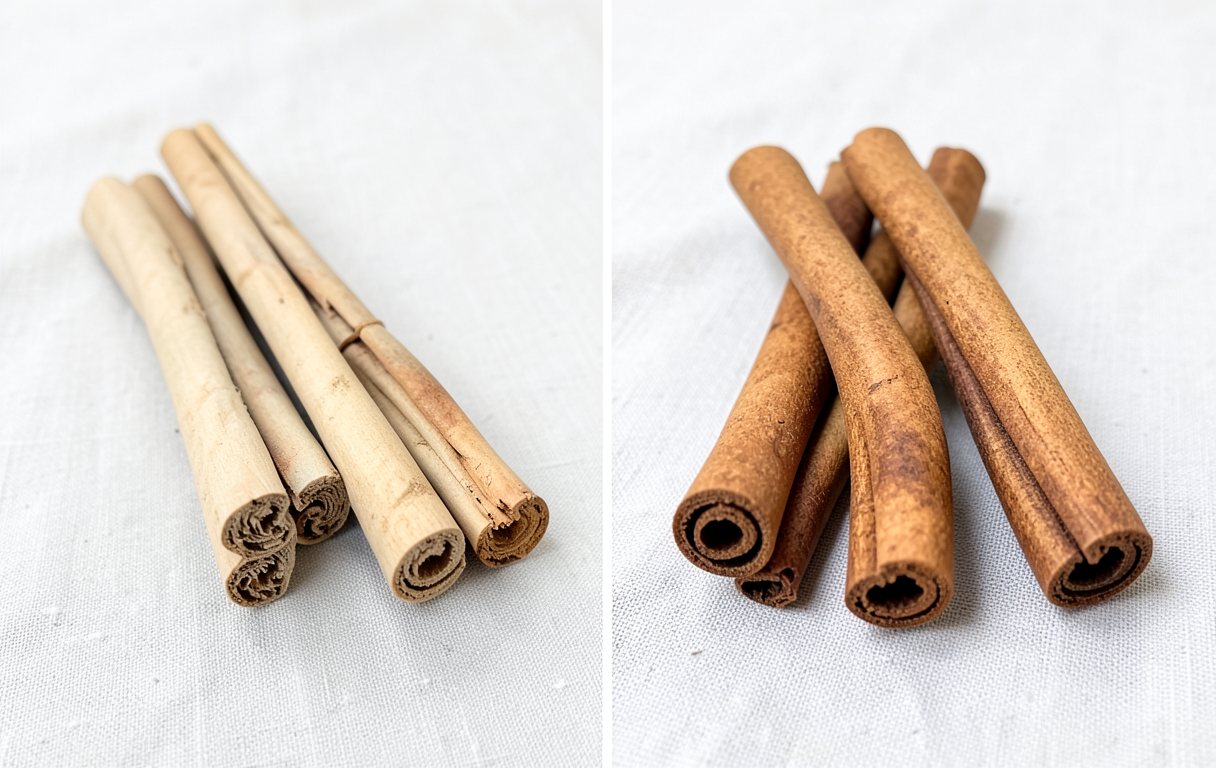
Ground cinnamon is harder to tell apart. Wikipedia describes a simple test: treated with tincture of iodine, pure Ceylon cinnamon shows little change, while Chinese cassia produces a deep-blue tint. The surest guide is the label — look for "Ceylon cinnamon", Cinnamomum verum or C. zeylanicum.
Why coumarin matters
Coumarin is a natural compound found in much higher amounts in cassia. According to the BfR:
- The tolerable daily intake is 0.1 mg of coumarin per kg of body weight.
- Cassia contains on average around 3 g of coumarin per kg.
- For a 60 kg adult, about 2 g of cassia a day reaches that limit.
- People who use cinnamon often in large amounts are advised to choose low-coumarin Ceylon cinnamon.
Wikipedia also reports that some cinnamon sold as Ceylon has been found to contain cassia. Read more in Coumarin Explained.
How Ceylon quills are made
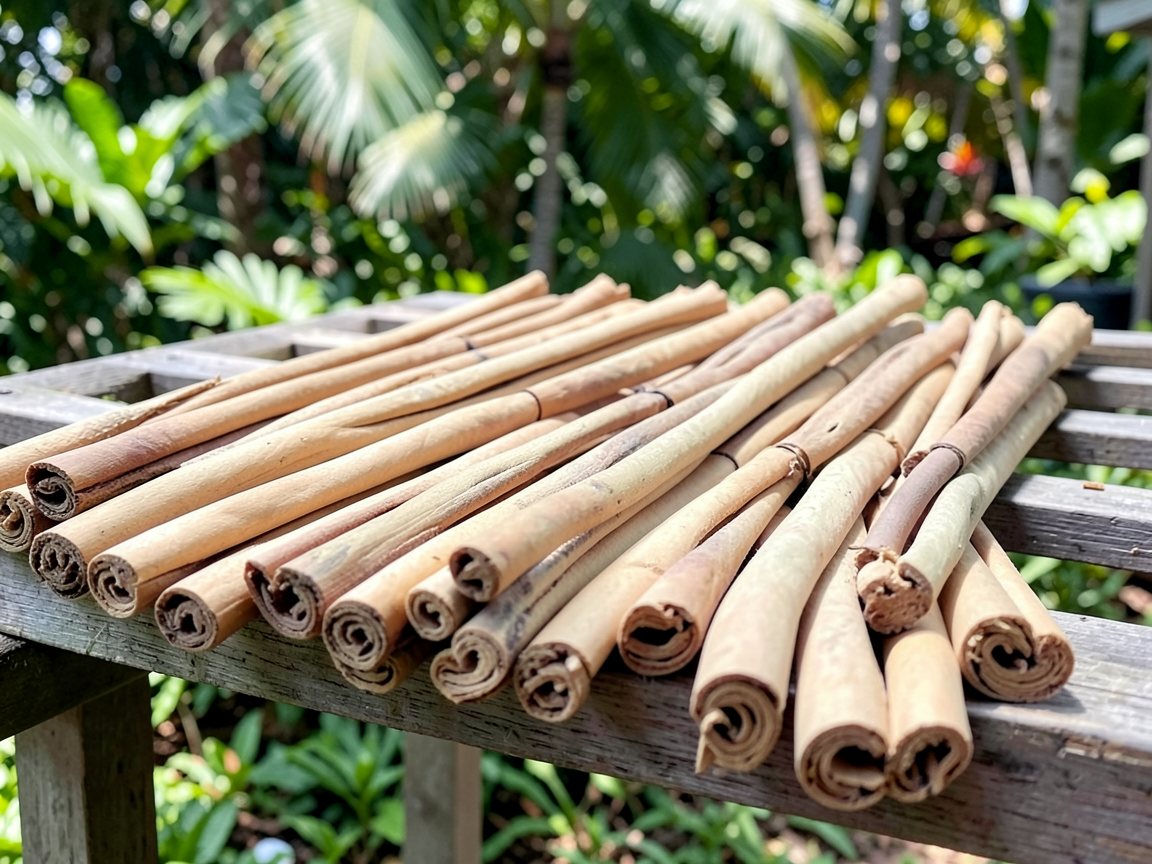
Ceylon cinnamon is peeled by hand: the inner bark is loosened with a brass rod, split and peeled off, then the quills are dried in the shade. Quills are graded by diameter — Alba, the finest, is under 6 mm across (Wikipedia). See How Ceylon Cinnamon Is Made.
What about health claims?
Cinnamon is often promoted for blood sugar or digestion. The US National Center for Complementary and Integrative Health states that studies have not clearly shown cinnamon is helpful for any health condition. We make no health claims for cinnamon.
Making a cinnamon drink
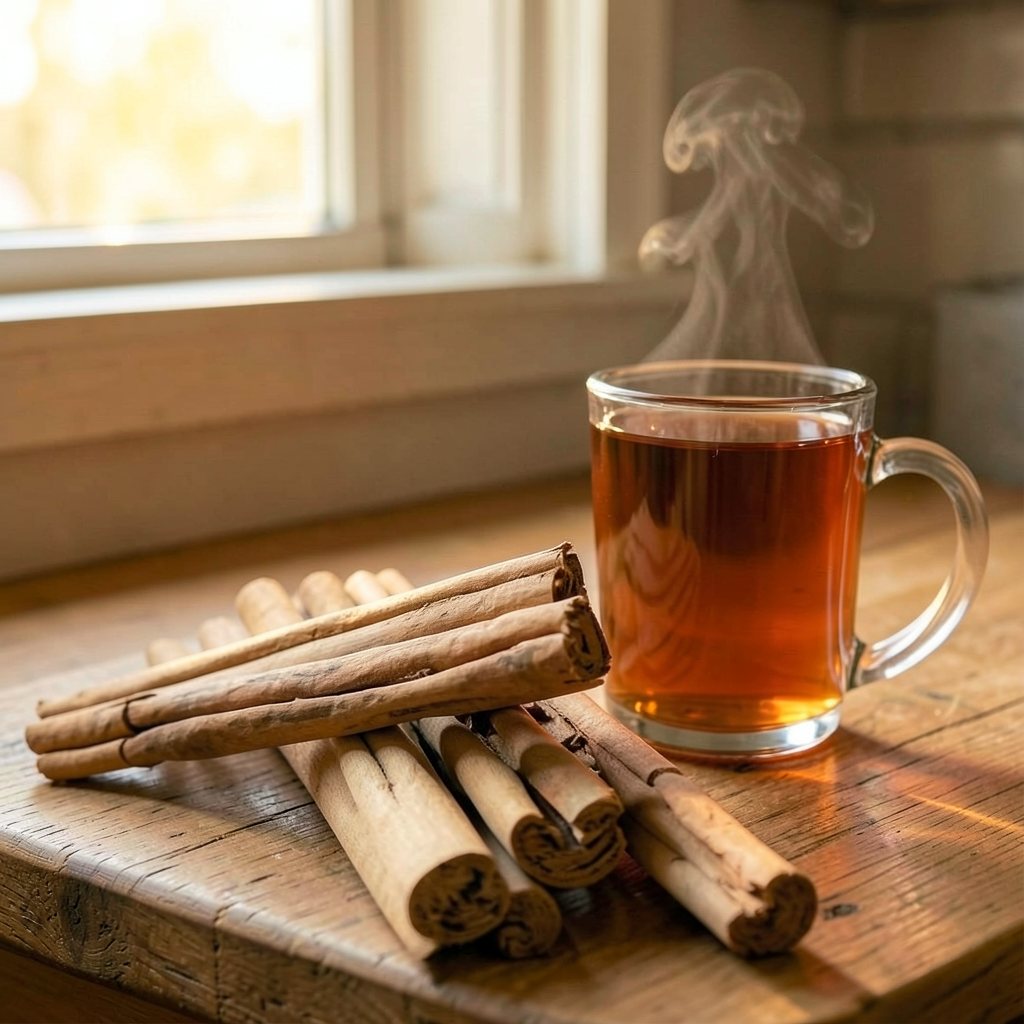
- Cinnamon infusion: Ceylon cinnamon quill packs suggest boiling cinnamon in water for a pure cinnamon drink. A pure cinnamon infusion contains no tea leaves.
- Cinnamon tea bags: many are blends of black tea and cinnamon — so they contain caffeine. Follow the pack directions; for example, one Ceylon cinnamon tea bag product recommends 5–7 minutes in water at 100 °C.
- With other teas: add a piece of quill to black tea or masala chai.
Frequently asked questions
Is most supermarket cinnamon cassia?
Wikipedia notes that most cinnamon in international commerce is cassia. If a label doesn't say Ceylon cinnamon or Cinnamomum verum/zeylanicum, it may well be cassia.
Is cinnamon tea caffeine-free?
A pure cinnamon infusion is. Cinnamon tea bags that contain black tea are not — check the ingredients.
Why does Ceylon cinnamon cost more?
Wikipedia notes that all the work of peeling Ceylon cinnamon is done by hand by experienced workers, which is the most expensive part of producing the spice.