Coumarin is a natural flavour compound found in many plants — and in much larger amounts in cassia than in Ceylon cinnamon. That difference is why food-safety authorities publish guidance on cinnamon.
This article draws on Wikipedia's articles on coumarin and cinnamon, and Germany's Federal Institute for Risk Assessment (BfR).
- Tolerable daily intake: 0.1 mg per kg body weight (EFSA, BfR)
- Ceylon cinnamon: 0.005–0.090 mg/g
- Chinese cassia: 1.74–7.67 mg/g
- Indonesian cassia: 2.14–9.30 mg/g
- Concern: cassia mixed into "Ceylon" products
What is coumarin?
Coumarin is an aromatic organic compound with a sweet, vanilla-like smell and a bitter taste. It was first isolated from tonka beans in 1820 and is found naturally in many plants, including sweet woodruff, tonka beans, cherries, strawberries — and cinnamon. Wikipedia notes that coumarin itself is not an anticoagulant, although some related compounds are.
How much is in cinnamon?
| Cinnamon | Coumarin (mg per g) |
|---|---|
| Ceylon cinnamon (C. verum) | 0.005–0.090 |
| Chinese cassia (C. cassia) | 1.74–7.67 |
| Indonesian cassia (C. burmannii) | 2.14–9.30 |
| Vietnamese cassia (C. loureiroi) | 1.06–6.97 |
Source: Wikipedia, Coumarin. Wikipedia's cinnamon article summarises that cassia usually contains well over 1 mg of coumarin per gram, while Ceylon cinnamon has only trace amounts.
Safety limits
- In 2008, the European Food Safety Authority confirmed a tolerable daily intake (TDI) of 0.1 mg of coumarin per kg of body weight (Wikipedia).
- The BfR explains that for a 60 kg adult, this TDI is reached with about 2 g of cassia cinnamon a day, and recommends that people who use cinnamon often in large amounts choose low-coumarin Ceylon cinnamon.
- The EU sets guideline maximums for coumarin in certain foods — for example 50 mg/kg in seasonal baked goods and 15 mg/kg in everyday baked goods (Wikipedia).
Wikipedia notes that coumarin can cause liver and kidney damage in high concentrations.
The adulteration problem
Wikipedia reports that in one analysis, authentic Ceylon cinnamon bark contained 12–143 mg/kg of coumarin, but market samples contained up to 3,462 mg/kg — indicating probable contamination with cassia. Another analysis found that the supplement with the highest coumarin content was labelled as Ceylon cinnamon.
Wikipedia's coumarin article adds that whole plant parts are harder to counterfeit than powder.
Ceylon cinnamon is naturally low in coumarin — but only if it really is Ceylon cinnamon.
Choosing cinnamon
- Look for "Ceylon cinnamon" or Cinnamomum verum / C. zeylanicum on the label.
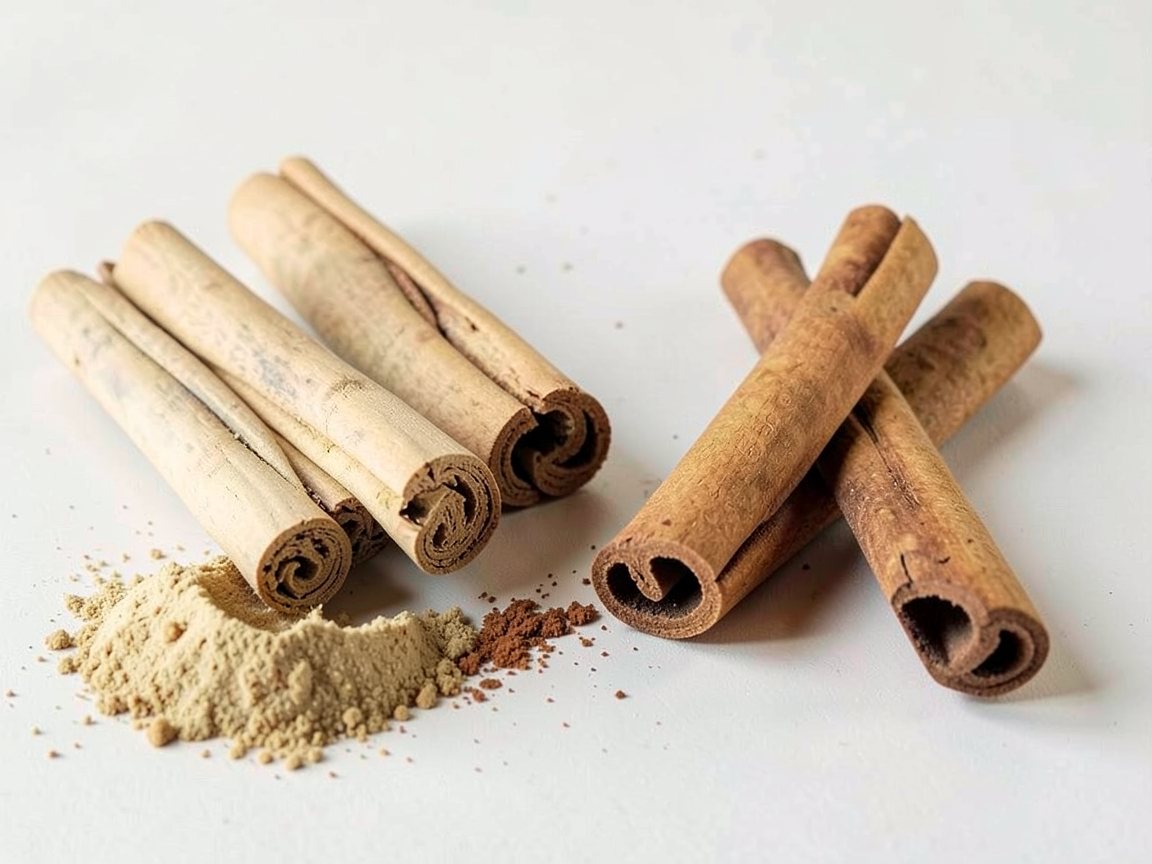
- Whole quills are easier to recognise — see True vs Cassia for how they differ.
- Buy from suppliers who can tell you the origin of their cinnamon.