Pick up a packet of Ceylon tea and you'll often find the words "Orange Pekoe". Many people assume it's a flavour. It isn't — there's no orange in it at all.
The Sri Lanka Tea Board puts it simply: "Contrary to popular belief, Orange Pekoe refers to a leaf size and not a flavour" (Tea Diversity). This guide explains the grading system using the Tea Board and Wikipedia's article on tea leaf grading.
- Grade, not flavour: describes leaf size
- No oranges — it contains only tea leaves
- OP = whole-leaf grade; BOP = the main broken grade
- Grading: by sieving through meshes of 8–30
- Caffeine: about 50 mg in a 220 ml cup of black tea (healthdirect)
What "Orange Pekoe" actually means
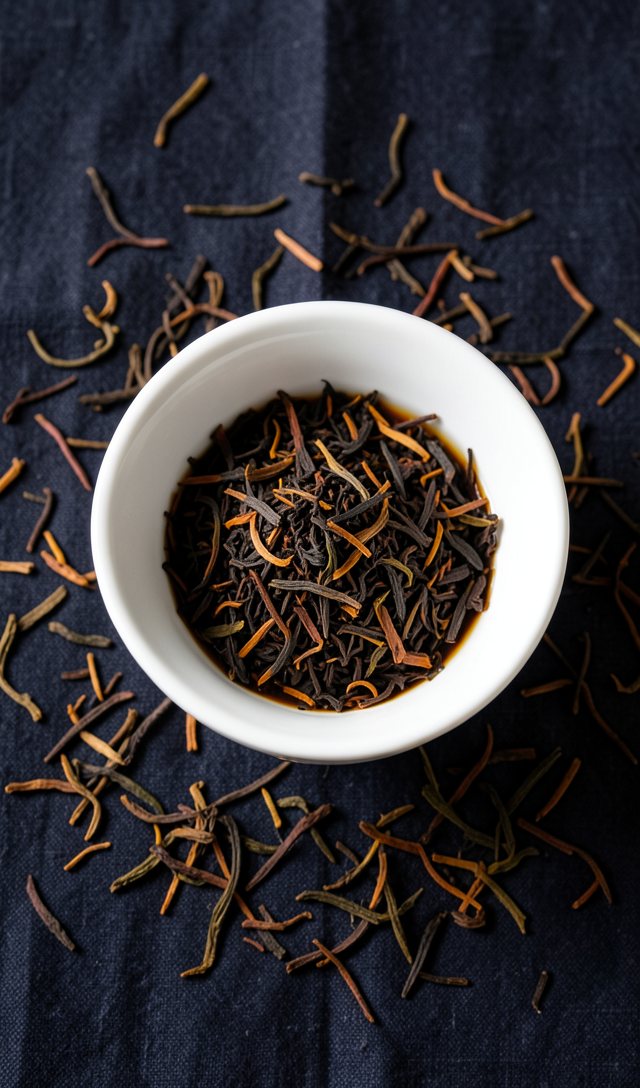
Wikipedia describes Orange Pekoe (OP) as a term used in the Western tea trade for a grade of black tea based on the size of the processed, dried leaves. Despite a purported Chinese origin, these grading terms are typically used for teas from Sri Lanka, India and other countries, and are not generally known in Chinese-speaking countries.
Where does "pekoe" come from?
The origin is uncertain. One explanation in Wikipedia is that it comes from the Amoy (Xiamen) dialect word for "white down/hair" — the fine hairs on the leaf bud. Another is that it derives from the Chinese for "white flower".
And "orange"?
Wikipedia gives two explanations, "though neither is definitive":
- The House of Orange: the Dutch East India Company, which played a central role in bringing tea to Europe, may have used "orange" to suggest an association with the Dutch royal House of Orange-Nassau.
- Colour: the copper colour of a high-quality oxidised leaf, or orange hues in the finished tea, may be related to the name.
Ceylon black tea grades
After drying, Ceylon tea is placed on a vibrating mesh and sorted by size into grades (Tea Board, production process). Wikipedia notes grading depends on whether leaves fall through meshes ranging from 8 to 30. The Tea Board describes these grades:
| Grade | Stands for | Sri Lanka Tea Board description (summarised) |
|---|---|---|
| OP | Orange Pekoe | A leaf size; a strong scent and smooth flavour with a sweet finish |
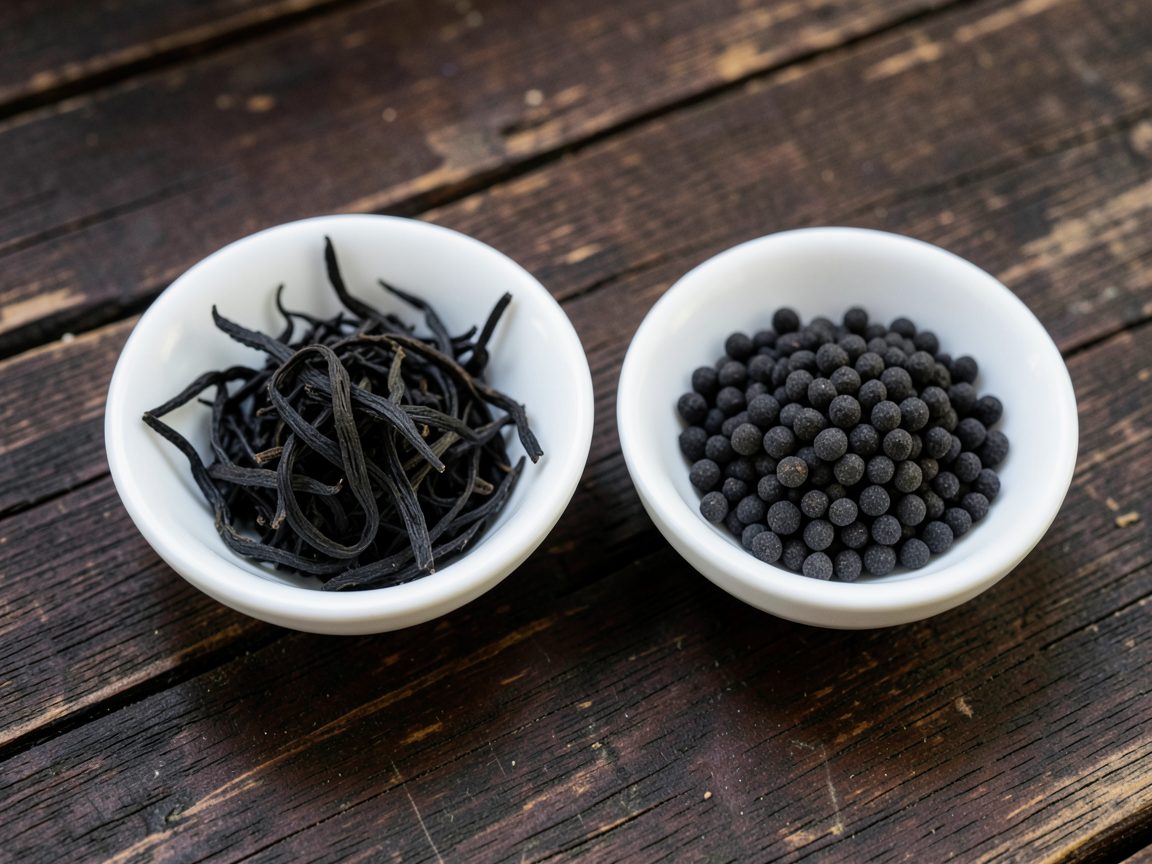
| Pekoe | Pekoe | Made from just-unfurling buds, tightly rolled into a near-spherical shape |
| FBOP | Flowery Broken Orange Pekoe | Like BOP but bigger; coarser semi-leaf tea with some tips; a mild yet flavourful brew |
| BOP | Broken Orange Pekoe | The main broken grade; infuses faster than whole leaf |
| BOP1 | Broken Orange Pekoe 1 | A well-twisted semi-leaf tea, generally from the low country |
| BOPF | Broken Orange Pekoe Fannings | Smaller than BOP, without tips; ideal for tea bags |
| Dust 1 | — | The smallest particles; infuse swiftly |
Wikipedia also notes that higher categories than OP exist, such as TGFOP1 (Tippy Golden Flowery Orange Pekoe, First Grade), determined mainly by leaf wholeness and size.
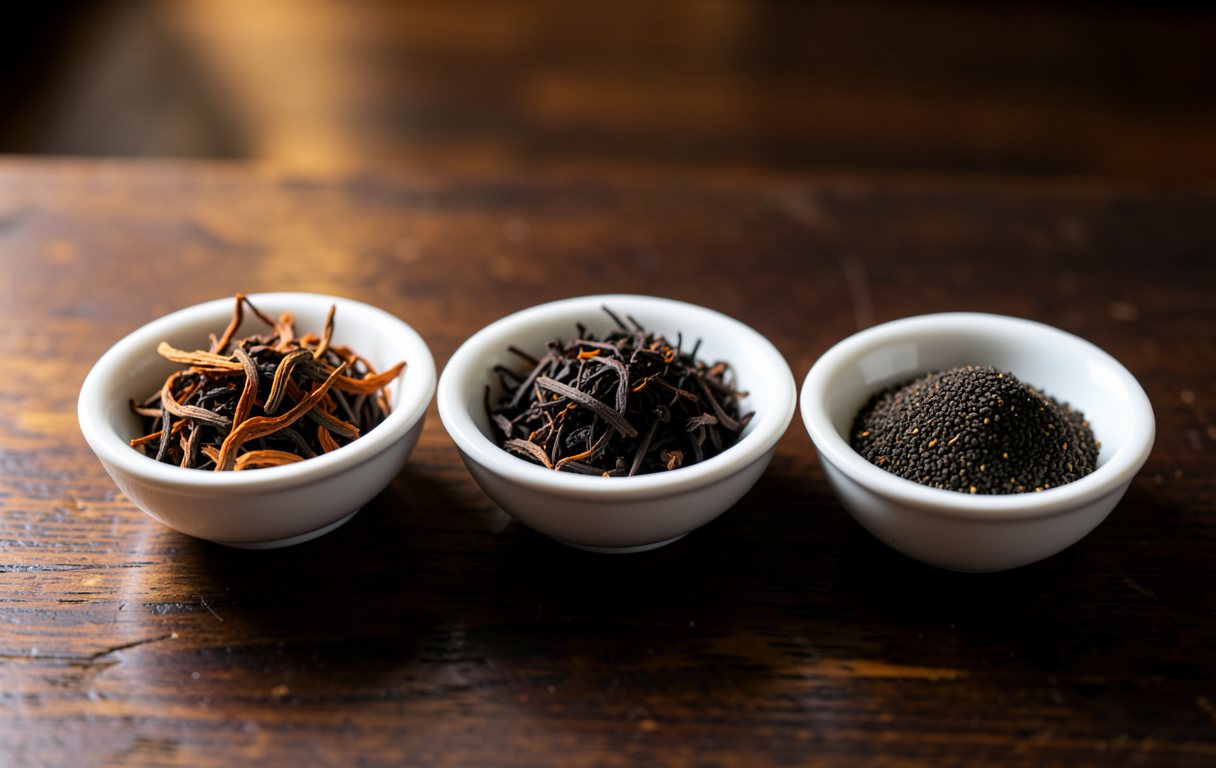
Grade is not the same as quality
Wikipedia notes that size and wholeness are not the only factors used to judge quality, although they strongly influence taste, clarity and brewing time. It also points out that the fannings of expensive teas can be more expensive and more flavourful than the whole leaves of cheaper teas.
"OP" on a label tells you the size of the leaf — not, on its own, how good the tea is.
In general, Wikipedia notes, larger leaves need a longer steeping time, and smaller broken grades brew faster.
How Ceylon black tea is made
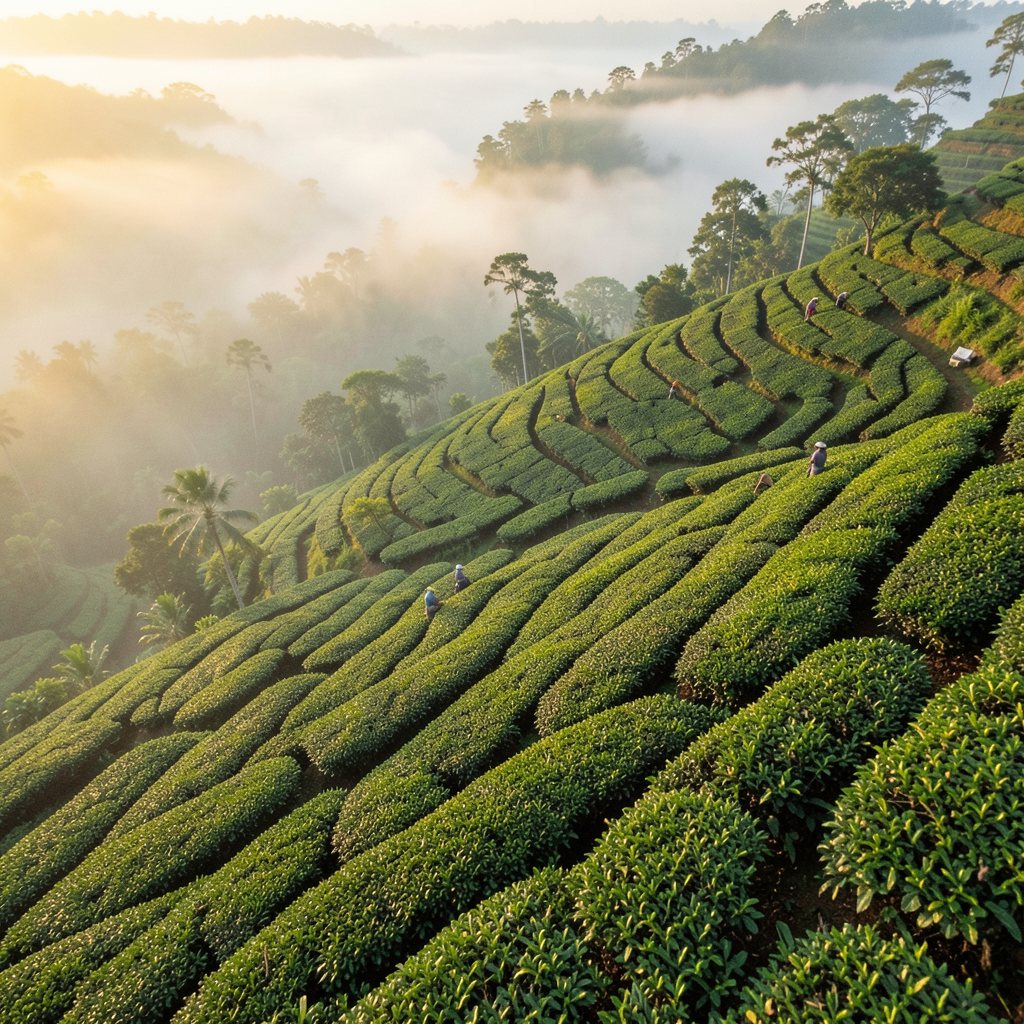
- Plucking: an unopened bud and two leaves are picked by hand.
- Withering: leaves are laid on troughs while air is circulated to reduce moisture.
- Rolling: machines break the leaf's cell structure to release its natural juices.
- Oxidation: exposure to air turns the leaf brown (often called "fermentation").
- Firing: hot air dries the leaf.
- Sorting: tea is sorted by size into grades.
Source: Sri Lanka Tea Board. Wikipedia notes that Sri Lanka produces primarily orthodox black teas — see Orthodox vs CTC and Two Leaves and a Bud.
What does it taste like?
Because OP is a grade, flavour depends on where the tea was grown. The Tea Board describes Nuwara Eliya teas as the lightest and most refined, Kandy teas as robust and full-bodied, and low-grown Ruhuna teas as strong and rich. See Ceylon Tea Regions Explained.
How to brew Orange Pekoe
Ceylon Orange Pekoe packs commonly recommend using 1–2 teaspoons per 250 ml cup, water at 100 °C, and steeping for about 3–5 minutes depending on preferred strength — always check the directions for your particular tea. Larger whole leaves generally need a longer steep than broken grades. For general tips, see How to Brew the Perfect Cup.
Frequently asked questions
Does Orange Pekoe tea contain orange?
No. Orange Pekoe is a grade describing leaf size. Wikipedia notes the "orange" is sometimes mistaken to mean the tea is orange-flavoured, which it is not. Unless the ingredients list orange, it contains only tea.
How much caffeine is in Orange Pekoe?
healthdirect Australia lists about 50 mg of caffeine in a 220 ml cup of black tea. The amount varies with the tea and how it is brewed. See Caffeine in Tea.
Is Orange Pekoe the same as Ceylon tea?
Not exactly. "Ceylon" tells you the tea is from Sri Lanka; "Orange Pekoe" tells you the leaf grade. The grading terms are used for teas from several countries.