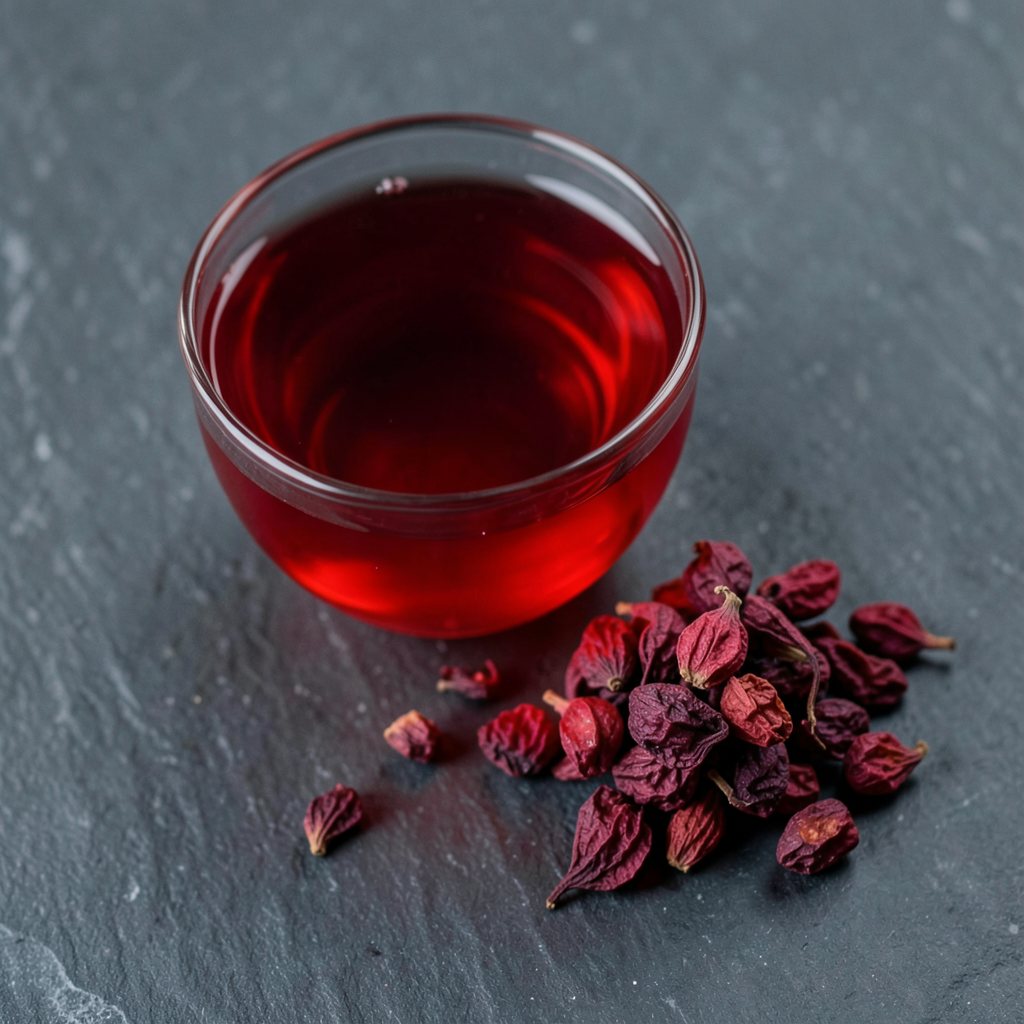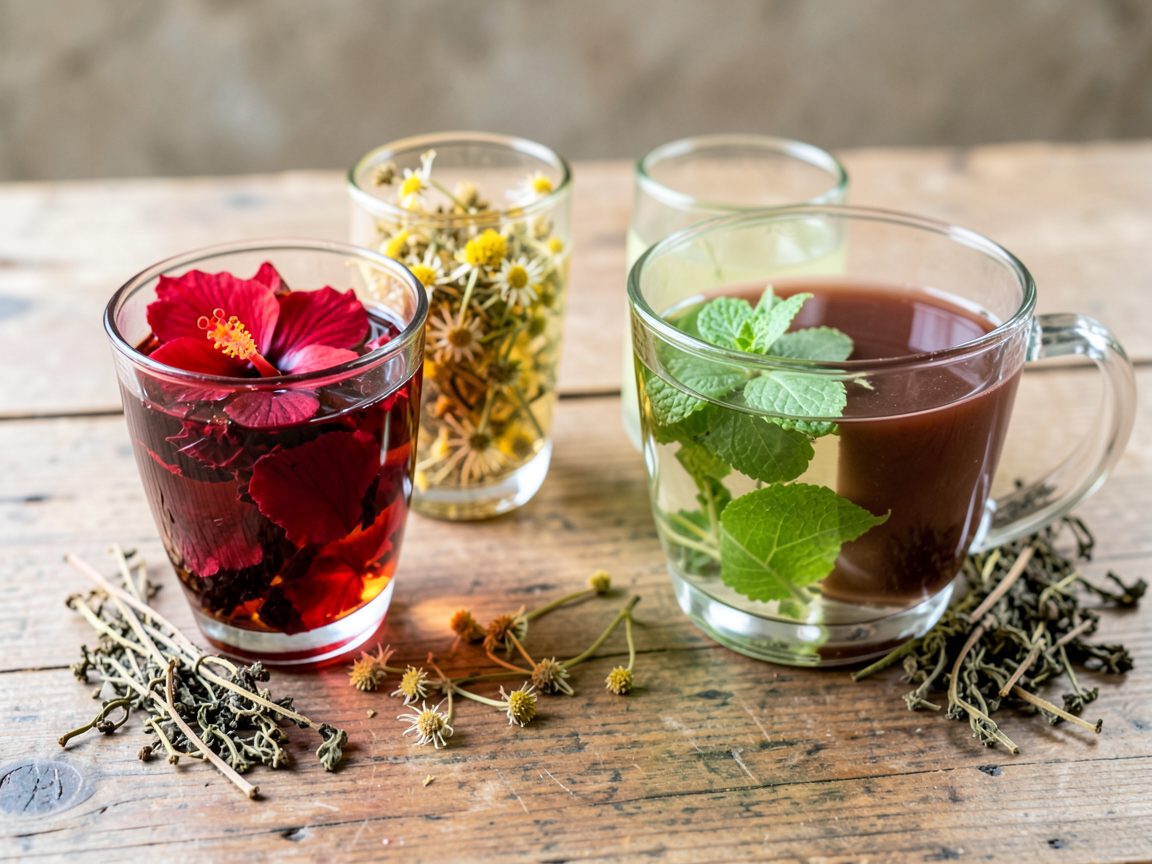
Most "hibiscus tea" is made from roselle — Hibiscus sabdariffa. But in several countries, the flowers of a different plant, Hibiscus × rosa-sinensis, are also dried and used as tea.
Both are sold as hibiscus tea, so this article explains the difference using Wikipedia's articles on roselle, Hibiscus × rosa-sinensis and hibiscus tea.
- Roselle: Hibiscus sabdariffa — the calyces are used
- Chinese hibiscus: Hibiscus × rosa-sinensis — the flowers are used
- Most hibiscus tea: made from roselle calyces
- Rosa-sinensis: dried flowers used as tea in several countries
- Check: the botanical name on the label
Roselle: Hibiscus sabdariffa
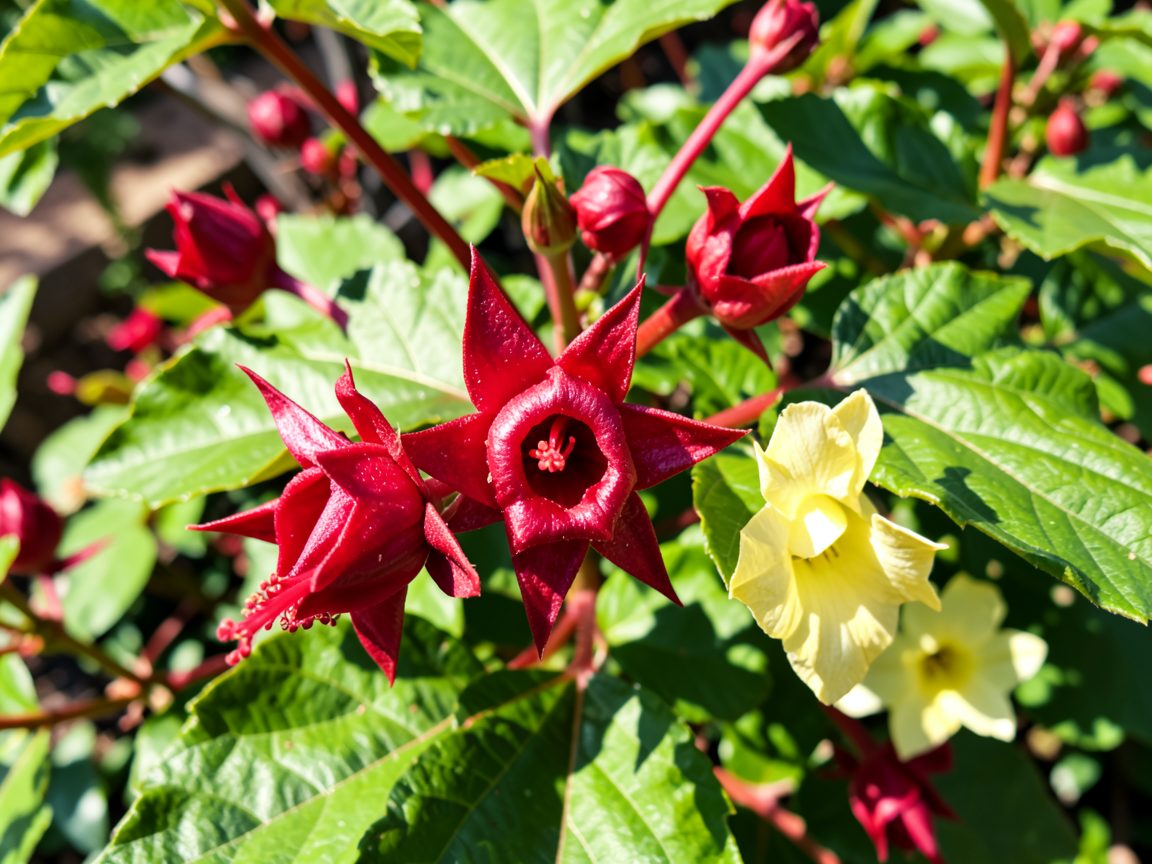
Wikipedia describes hibiscus tea as an infusion made from the crimson or deep magenta sepals or calyces of the roselle flower. Roselle is likely native to parts of Africa and was spread to Asia and the West Indies in the 16th and early 17th centuries.
- The flowers are white to pale yellow with a dark red spot; the calyx at the base becomes fleshy and deep crimson as the fruit matures.
- The tea has a tart, strong, cranberry-like flavour.
- In Australia it is known as rosella — see Rosella in Australia.
Chinese hibiscus: Hibiscus × rosa-sinensis
Hibiscus × rosa-sinensis — also called Chinese hibiscus, China rose or Hawaiian hibiscus — is widely grown as an ornamental plant in the tropics and subtropics, and is the national flower of Malaysia. Wikipedia notes:
- Its flowers are typically red with five petals about 10 cm across, though cultivars come in many colours.
- "In several countries the flowers are dried to use in a beverage, usually tea."
- Its name means "rose of China", although it is not closely related to roses and is not from China; a 2024 study found it to be a hybrid created in cultivation by Polynesians.
Side by side
| Roselle | Chinese hibiscus | |
|---|---|---|
| Botanical name | Hibiscus sabdariffa | Hibiscus × rosa-sinensis |
| Part used for tea | Calyces (fleshy red sepals) | Dried flowers |
| Known as | Rosella (Australia), sorrel (Caribbean), karkadé (Egypt, Sudan) | China rose, Hawaiian hibiscus |
| Research | The species in the blood-pressure studies described on Wikipedia's roselle page | A different plant; research on roselle shouldn't be assumed to apply |
How to tell which you have
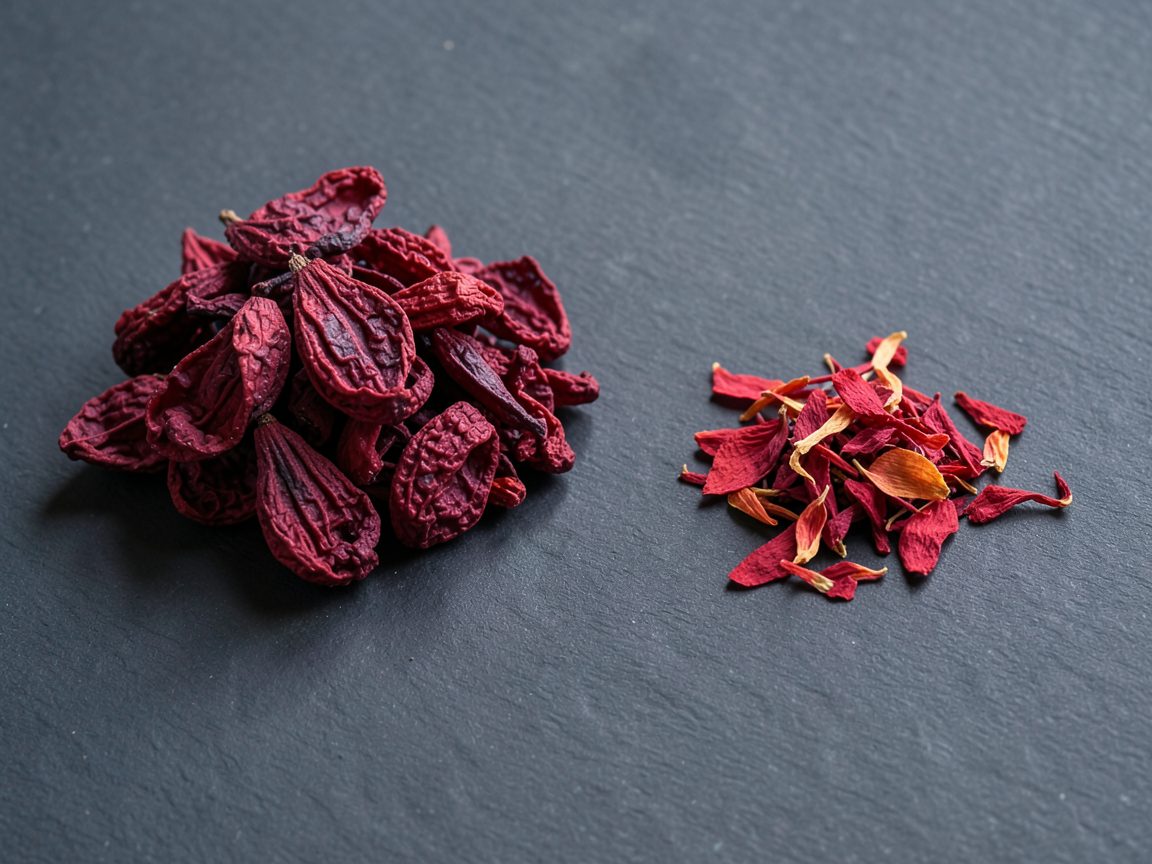
Look for the botanical name on the pack. Calyces of roselle look like small, crinkled, star-shaped pods; dried rosa-sinensis flowers look like petals. Because they are different plants, research on one shouldn't be assumed to apply to the other.
Same common name, different plants — the botanical name on the label tells you which hibiscus you're drinking.