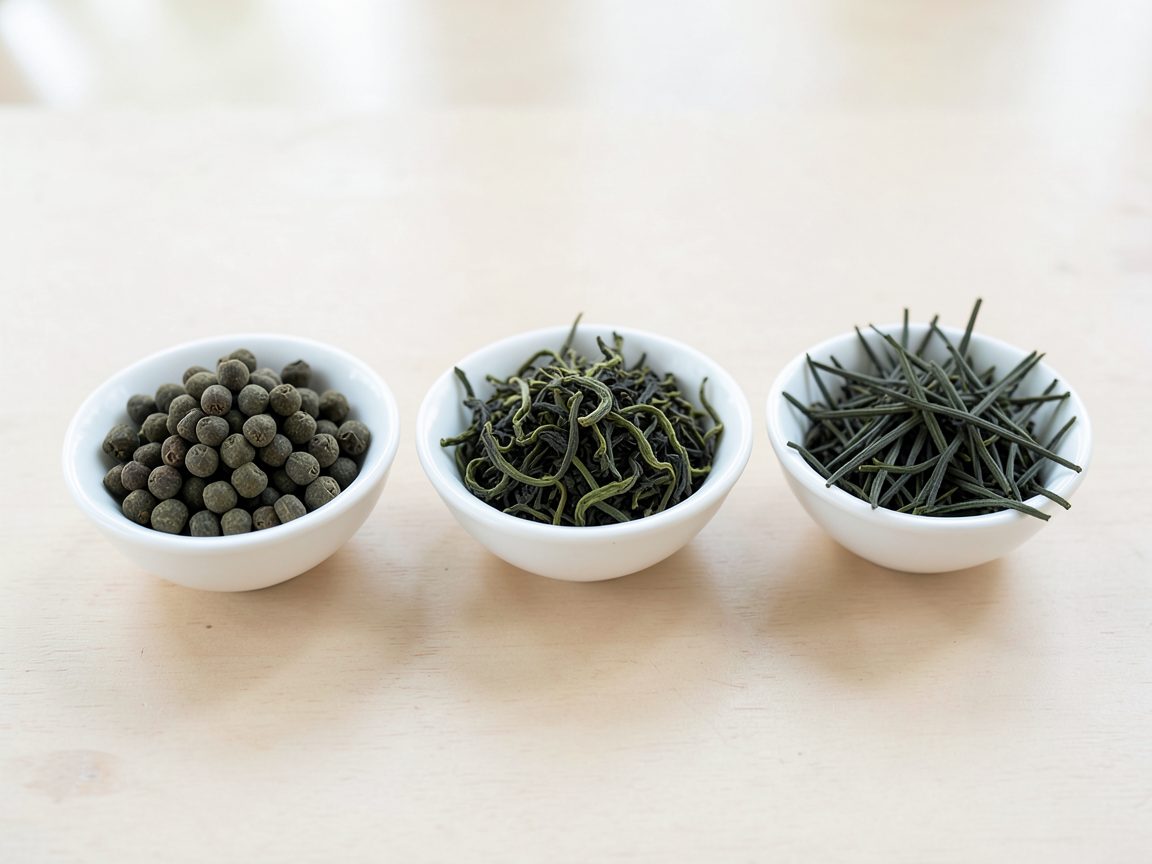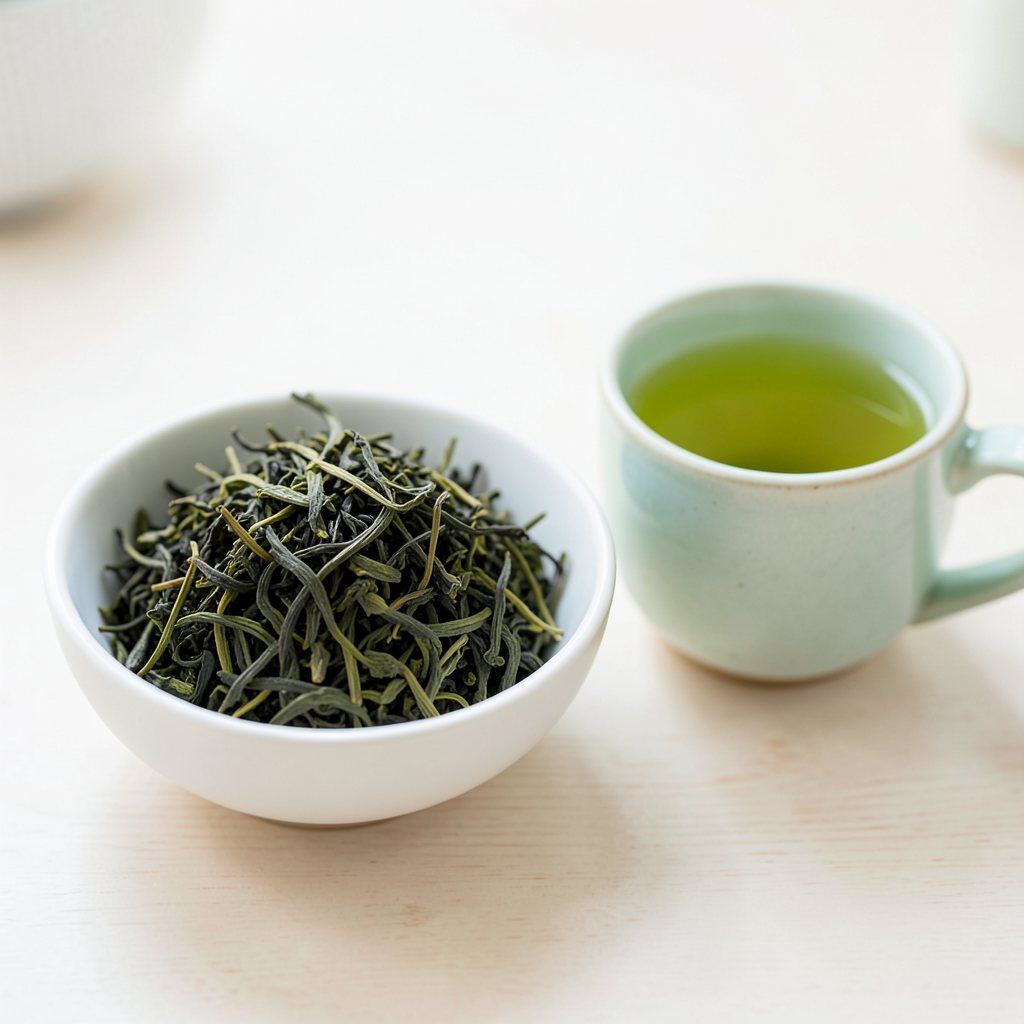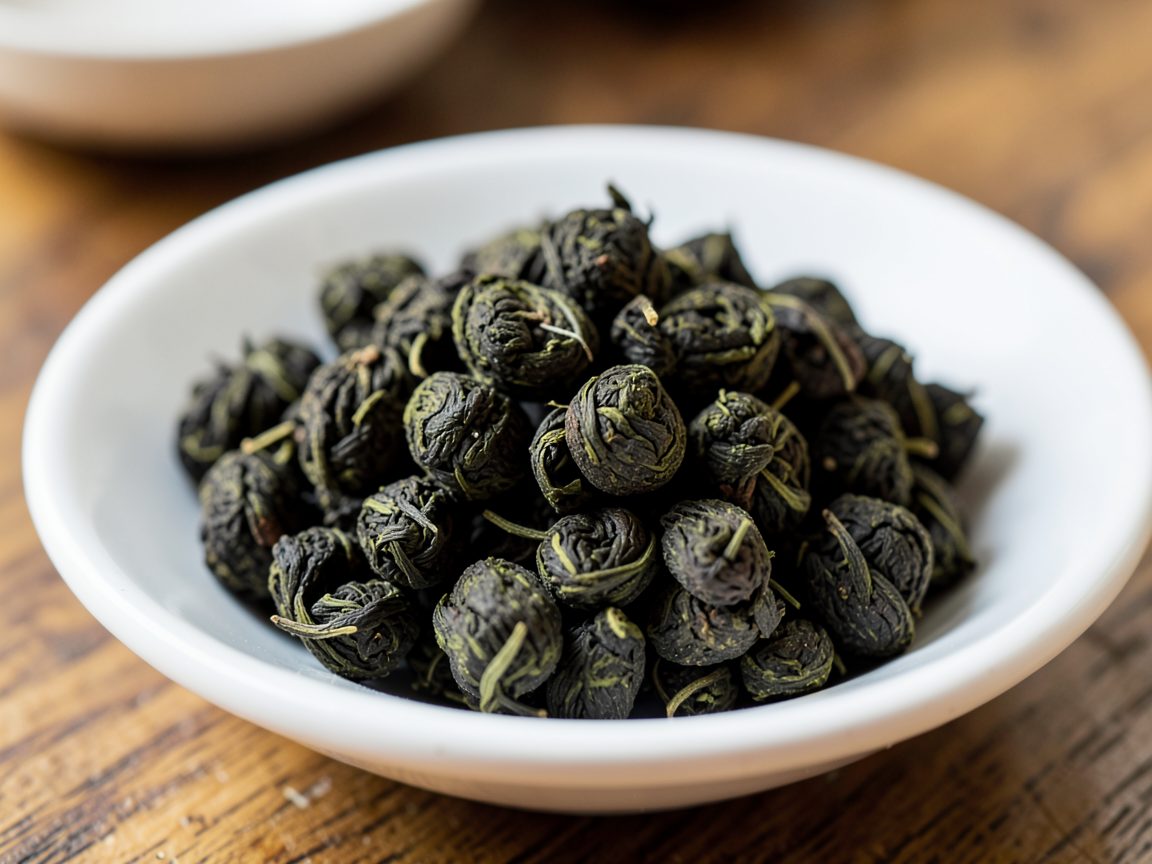
Gunpowder tea looks nothing like ordinary loose tea. Each leaf is rolled into a small, tight pellet — which opens up into a full leaf as it brews.
This article is based on Wikipedia's article on gunpowder tea and the Sri Lanka Tea Board's Tea Diversity page.
- Chinese name: zhū chá, "pearl tea"
- Dates to: the Tang dynasty (618–907)
- Process: withered, steamed, rolled, then pan-fired
- Brew: 70–80 °C, about 1 minute (Wikipedia)
- Used for: Maghrebi mint tea
What is gunpowder tea?
Gunpowder tea is tea in which each leaf has been individually rolled into a small pellet. This rolling method is most often applied to green tea — the variety most commonly found outside China — or to oolong. In Mandarin it is called zhū chá, meaning "pearl tea" or "bead tea".
Where does the name come from?
Wikipedia gives several possible explanations:
- The pellets resemble the greyish, dark grains of old gunpowder.
- The rolled pellet "explodes" into a long leaf when steeped.
- The tea may have a smoky flavour.
- It may come from a Mandarin phrase for "freshly brewed", gāng pào de, which sounds similar to "gunpowder".
The Sri Lanka Tea Board says the name comes from the tea being rolled into small pellets "befitting ammunition used in old muskets", and dates it back to the 1800s.
How it's made
According to Wikipedia, gunpowder production dates back to the Tang dynasty (618–907). The leaves are withered, steamed, rolled into pellets and dried. The pellets are then dried or "heat-fixed" by pan-firing, sometimes several times, which may add a slight smoky flavour. Formerly all leaves were rolled by hand; today all but the highest grades are rolled by machine.
Rolling makes the leaves less susceptible to damage in packaging and storage, and helps them retain flavour and aroma.
Judging quality
- Shine: shiny pellets indicate the tea is relatively fresh.
- Size: high-quality gunpowder has small, tightly rolled pellets; larger, looser pellets indicate lower quality.
- Grades: graded alphanumerically, with 3505AAA considered the highest.
How to brew gunpowder tea
These are the brewing guidelines given by Wikipedia, which also recommends rinsing the cup or teapot with hot water first to warm it. Product packs may give their own directions — follow those for a specific tea.
Gunpowder and mint tea
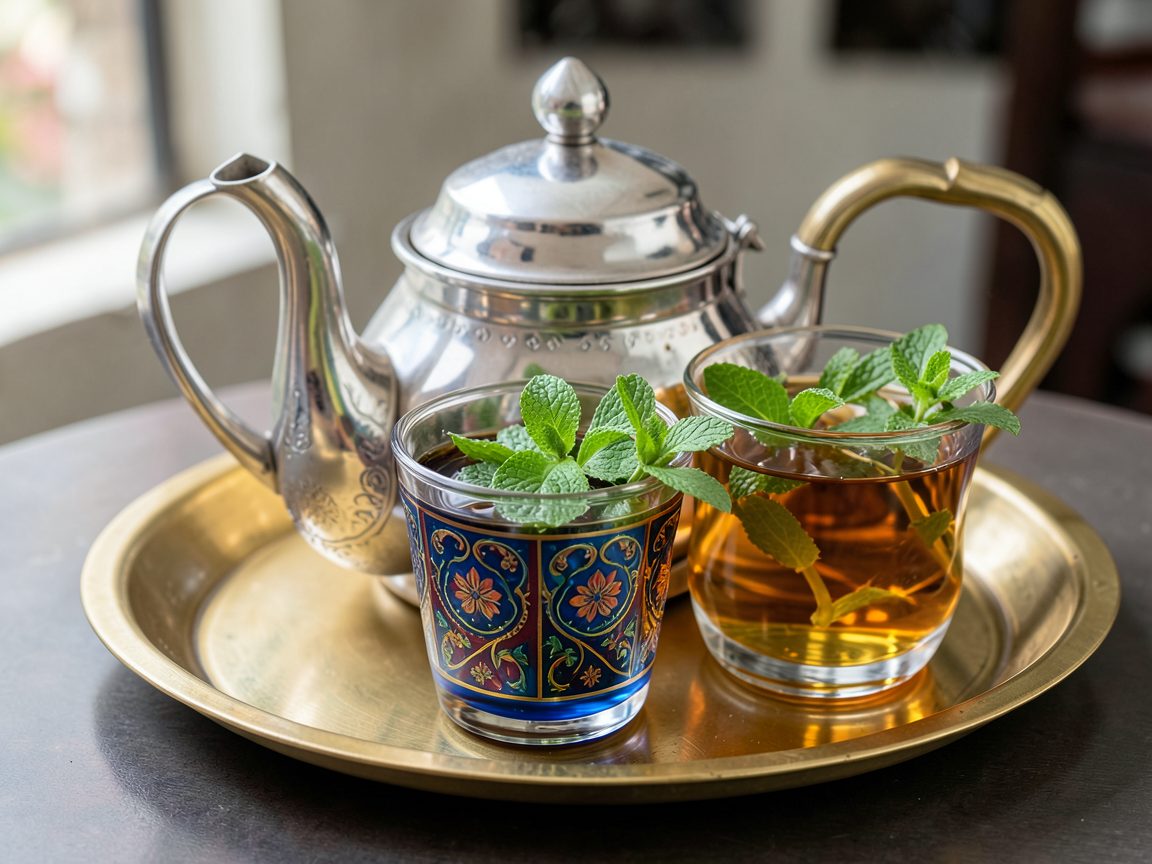
Gunpowder tea is exported to the Maghreb, where it is the base of traditional North African mint tea. Read Maghrebi Mint Tea.