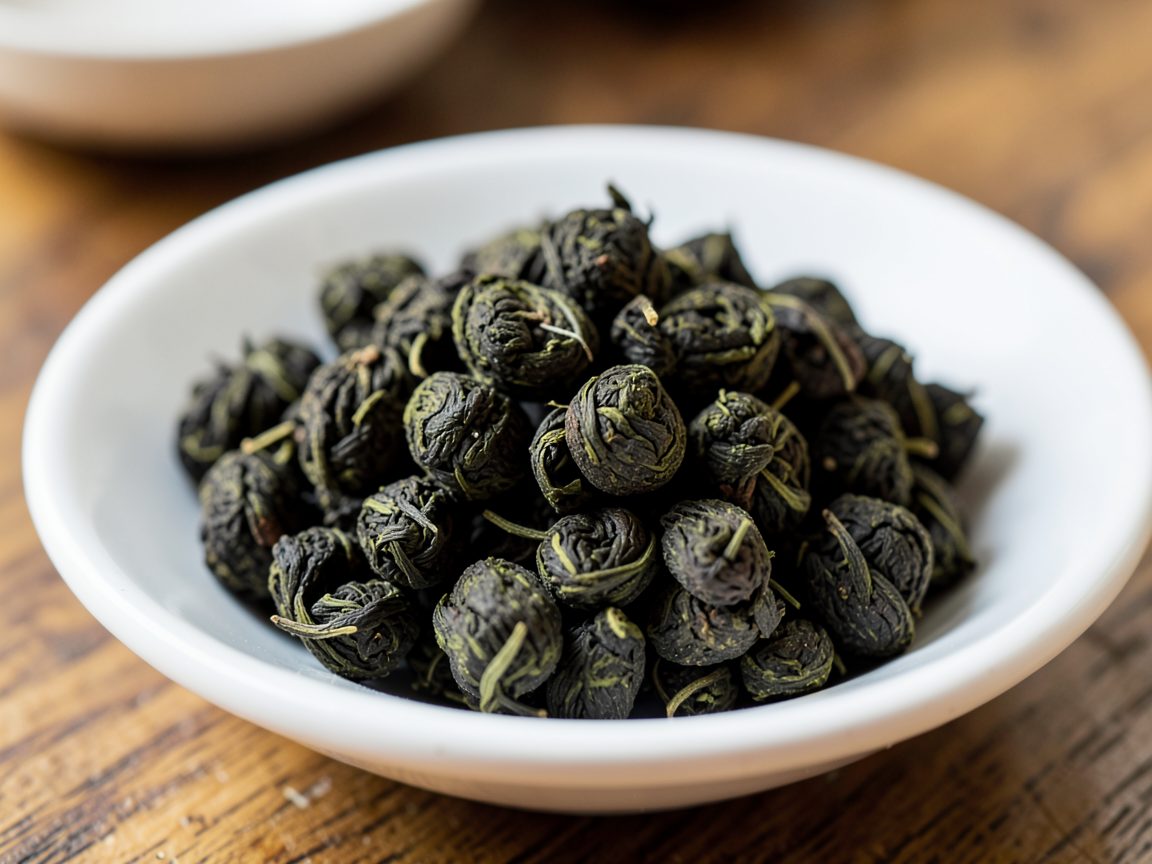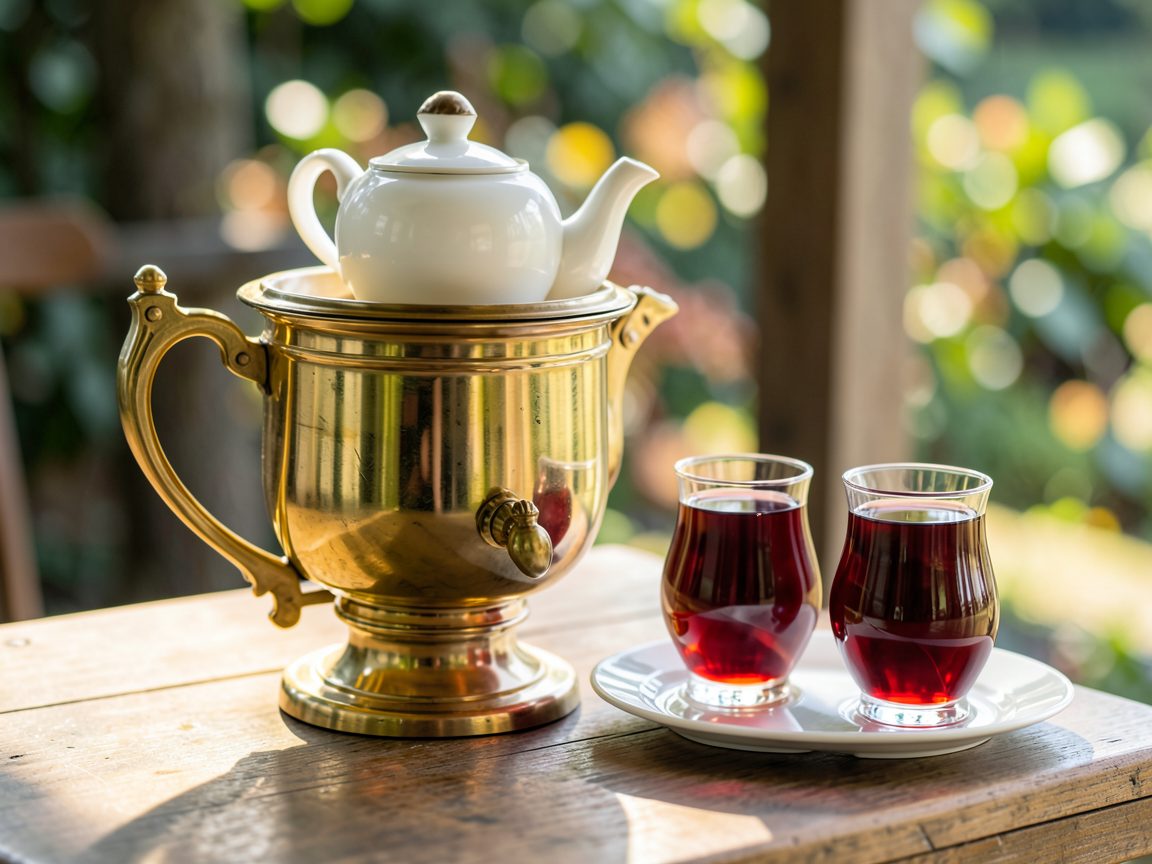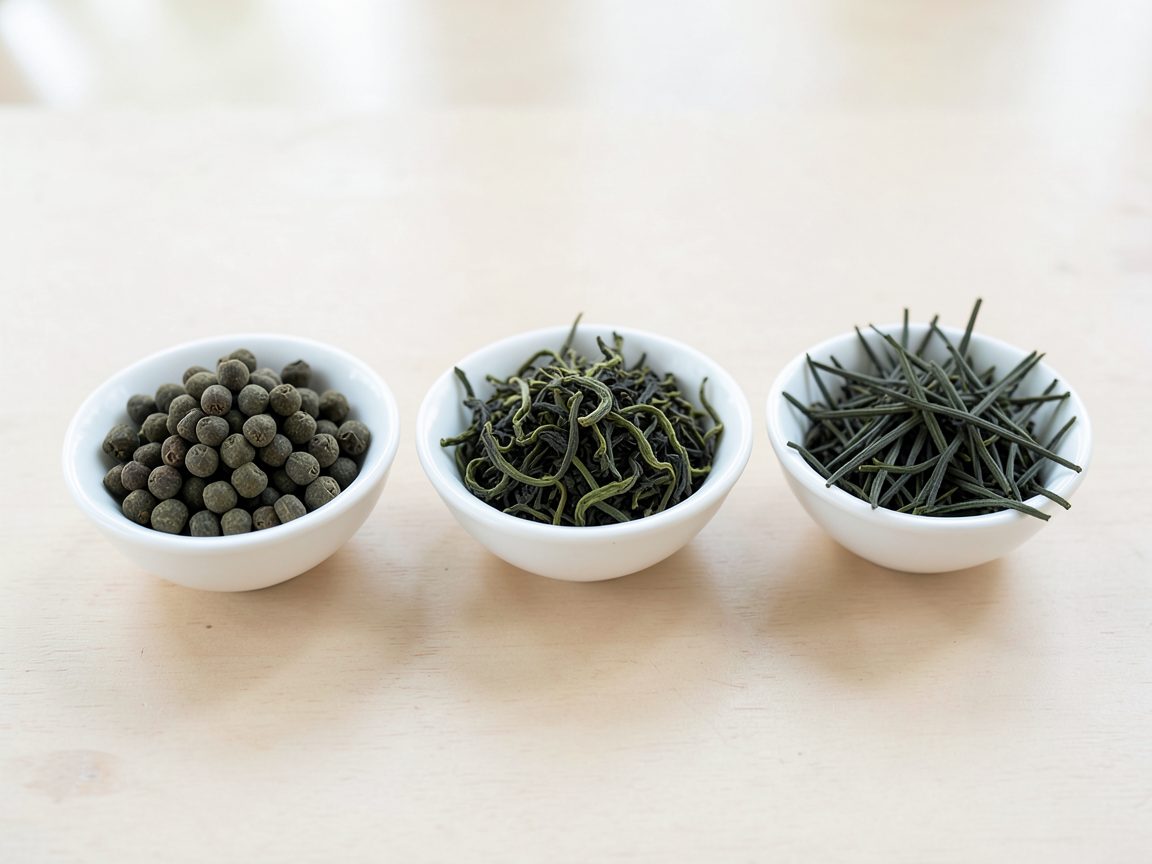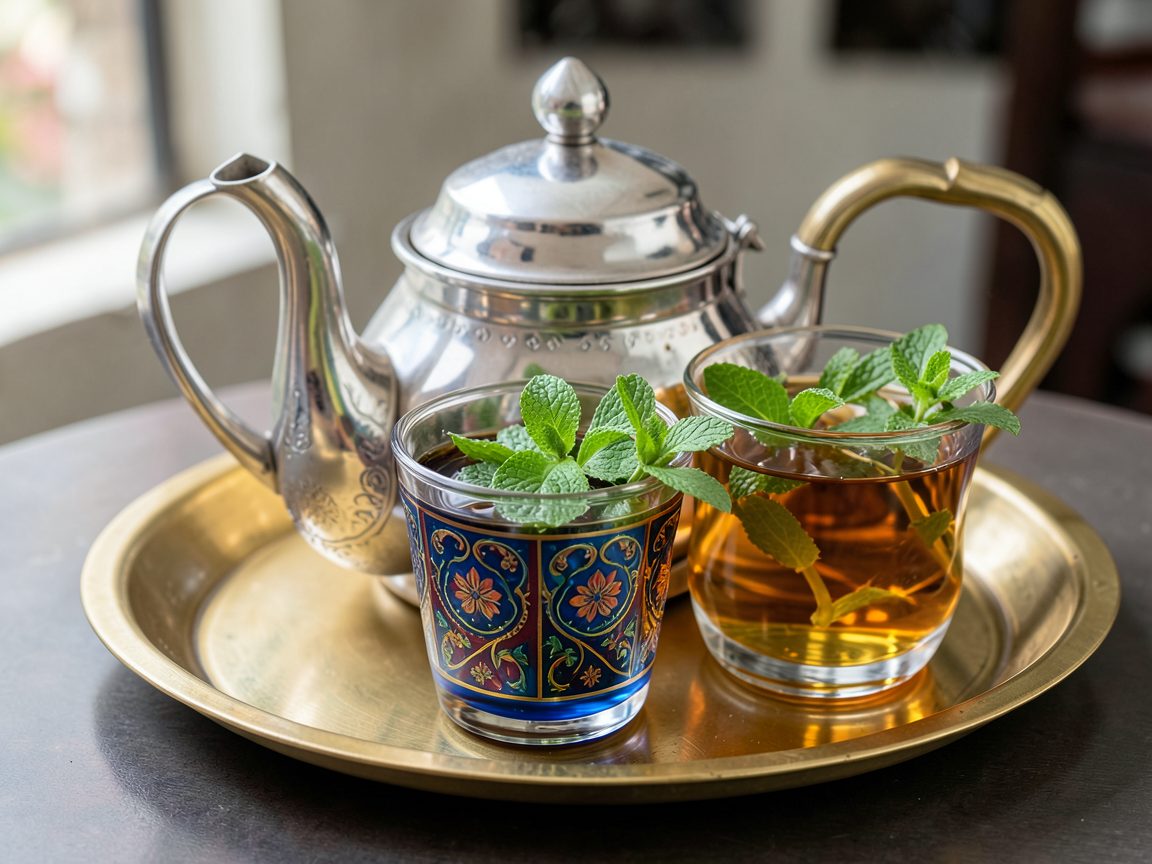
In the Maghreb, offering mint tea is a gesture of welcome. Wikipedia's article on Maghrebi mint tea describes it as a North African preparation of gunpowder green tea with spearmint leaves and sugar.
It is also known as Moroccan, Algerian or Tunisian mint tea.
- Ingredients: gunpowder green tea, spearmint, sugar
- Region: Algeria, Tunisia, Morocco, Libya, Mauritania
- Introduced: by the British, 18th–19th centuries
- Served: usually at least three glasses
- Poured: from a height to swirl the leaves
Where it's drunk
Mint tea is traditional to the Greater Maghreb — Algeria, Tunisia, Morocco, Libya and Mauritania — and has spread through North Africa, parts of the Sahel, France, Spain, the Arab world and the Middle East. Wikipedia notes it is very popular among the Tuareg people.
History
- 18th–19th centuries: gunpowder tea was introduced into North Africa by the British via Morocco and Algeria.
- 1840s: traveller James Richardson described a Moroccan tea ceremony and noted tea was drunk widely all day.
- After 1856: following an Anglo-Moroccan treaty, and when tea meant for the Baltic was diverted to Morocco during the Crimean War, tea imports quadrupled.
- Early 20th century: mint tea had become well established in Morocco.
A ritual of hospitality
Wikipedia describes mint tea as central to social life in the Maghreb. Serving it can take a ceremonial form, especially for a guest. The tea is traditionally made by the head male of the family and offered to guests as a sign of hospitality, and typically at least three glasses are served.
The Sri Lanka Tea Board's tea traditions article adds that in Morocco the tea is served in three rounds, and that refusing a serving can offend the host.
Ingredients and method
The basic ingredients are green tea, fresh mint leaves, sugar and boiling water; proportions and brewing time vary widely. Wikipedia notes that boiling water is used in the Maghreb, rather than the cooler water used in East Asia. The leaves are left in the pot as the tea is drunk, so the flavour changes from glass to glass, and the tea is poured from high above to swirl the leaves.
Wikipedia's teapot article adds that Moroccan teapots have a long curved spout for pouring from a height of around 30 cm, which produces foam on the tea.
The traditional mint is native spearmint (naʿnāʿ). In Morocco the tea is sometimes perfumed with orange blossom water or other herbs.