All green teas share one thing: the leaf is heated soon after picking to stop oxidation. How that heating is done — and where the tea is grown — creates very different teas.
This guide draws on Wikipedia's articles on green tea, sencha, gunpowder tea, Longjing tea and matcha.
- Japanese green tea: usually steamed
- Chinese green tea: usually pan-fired
- Sencha: about 80% of Japan's tea
- Gunpowder: leaves rolled into pellets
- Sri Lanka: produces gunpowder and sencha
Steamed vs pan-fired
Wikipedia's sencha article explains that Japanese green tea is first steamed for 15–20 seconds to prevent oxidation, while Chinese green teas are initially pan-fired. It notes that steamed Japanese teas tend to have a more vegetal, almost grassy flavour (some say seaweed-like), and are greener in colour and slightly more bitter than Chinese-style green teas.
The main styles
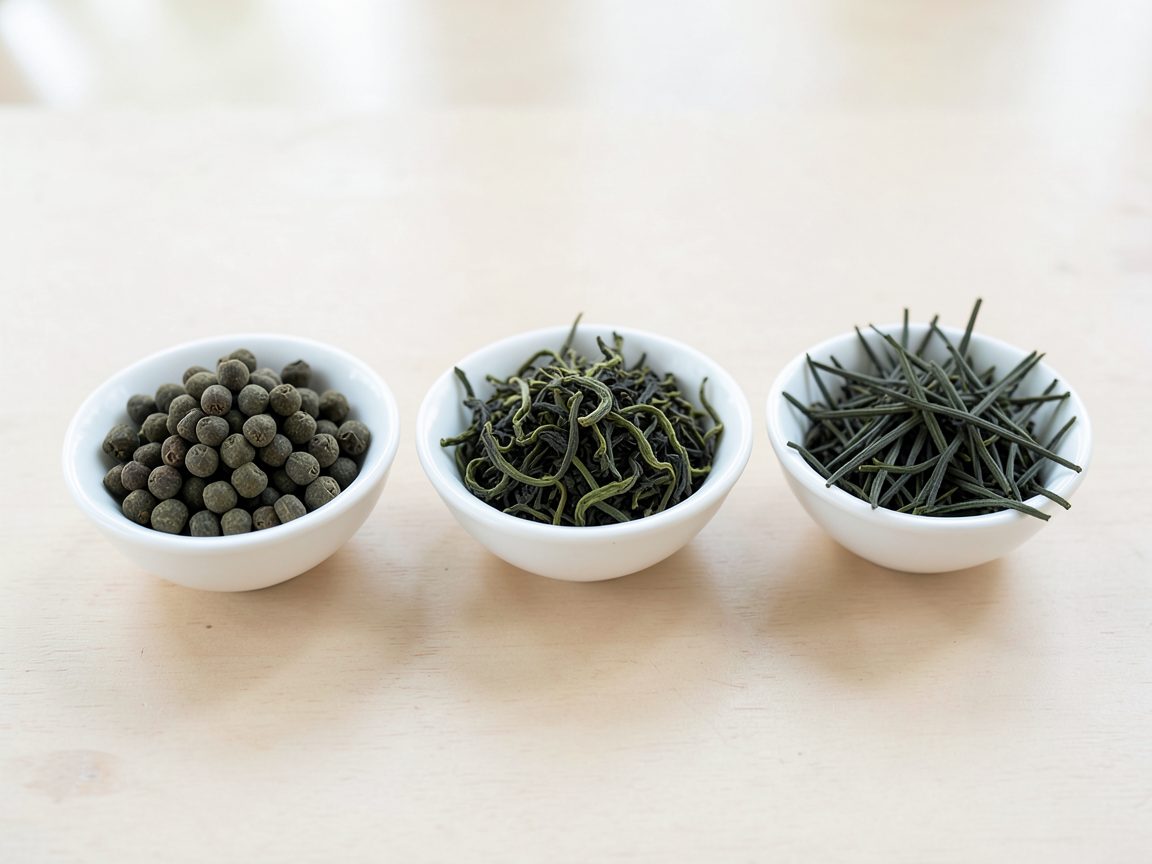
| Tea | Origin | How it's made | As described by Wikipedia |
|---|---|---|---|
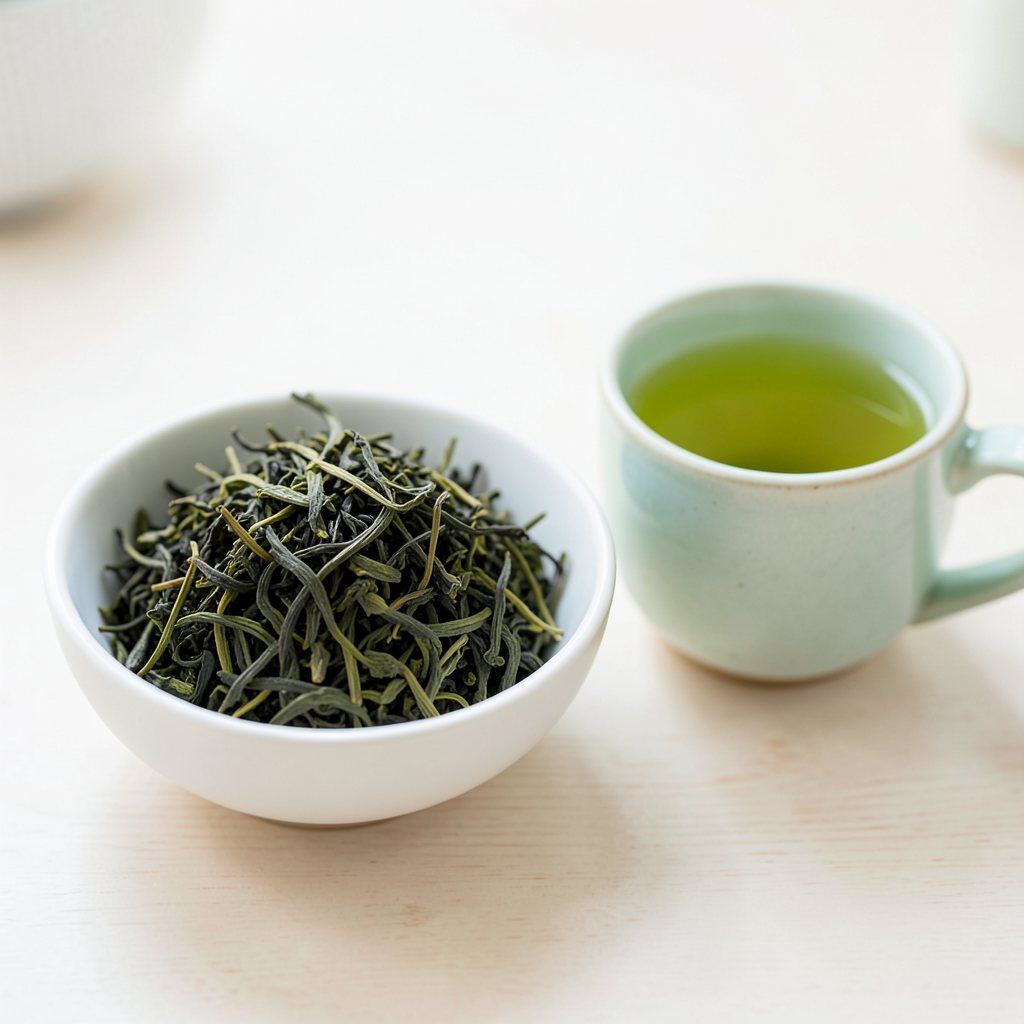
| Sencha | Japan | Steamed, rolled into thin cylindrical leaves | Greenish-golden; mellow with cooler water, more astringent with hot |
| Longjing (Dragon Well) | Hangzhou, China | Pan-roasted and shaped flat by hand | Yellow-green; sweet, fresh, vegetal or chestnut-like |
| Gunpowder | China (and elsewhere) | Each leaf rolled into a small pellet | Brews yellow; pan-firing may add a slight smokiness |
| Matcha | Japan | Shade-grown, steamed, dried unrolled and ground to powder | Bright green with strong umami |
Sencha
Sencha is the most popular tea in Japan, representing about 80% of the country's tea production. Shincha, "new tea" from the year's first flush, is considered the most delicious. Wikipedia estimates sencha contains around 20–30 mg of caffeine per cup.
Longjing
Longjing, or Dragon Well, is a pan-roasted green tea traditionally produced around Longjing Village near West Lake in Hangzhou, and is regarded as one of China's Famous Teas. Wikipedia notes it is frequently imitated, and that tea grown within the traditional area is protected under geographical designations.
Gunpowder
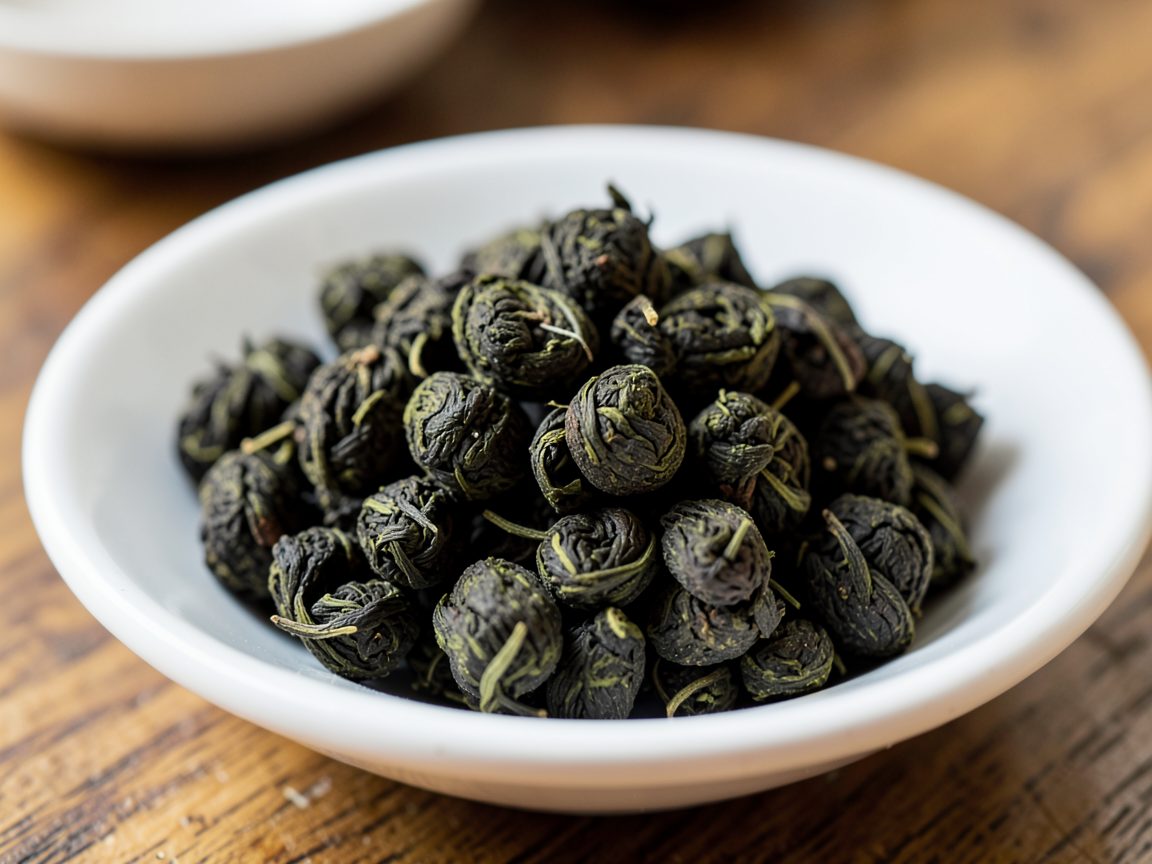
Gunpowder tea's leaves are individually rolled into pellets. It is the tea used for North African mint tea. Read more in Gunpowder Green Tea.
Matcha
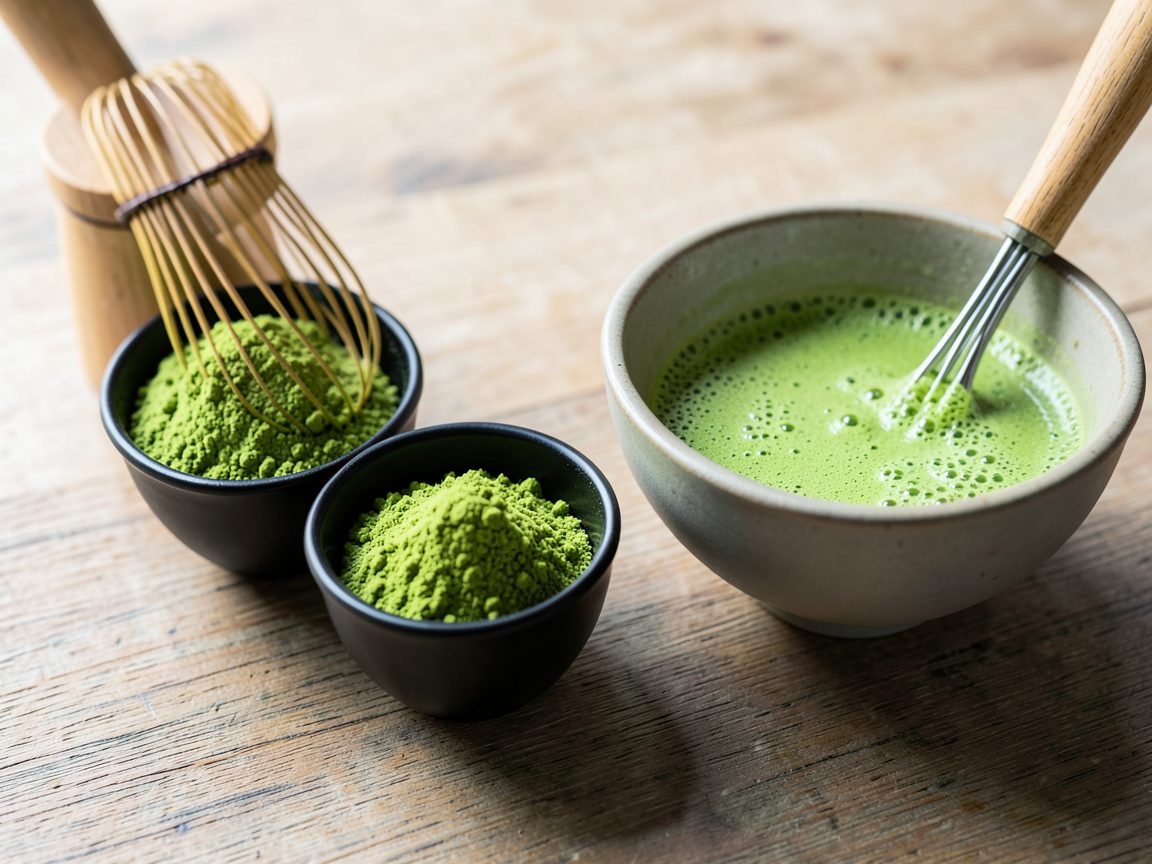
Matcha is a fine powder of shade-grown green tea, whisked into hot water rather than steeped. See Matcha Explained.
Ceylon green tea
Wikipedia's tea production in Sri Lanka article states that the two types of green tea produced in Sri Lanka are gunpowder and sencha. The Sri Lanka Tea Board records that production and export of green tea began there in 1982. See Ceylon Green Tea.
Brewing green tea
Wikipedia's green tea article gives typical steeping temperatures of 61–87 °C and steeping times of 30 seconds to three minutes. Steeping too hot or too long releases excessive tannins, giving a bitter, astringent brew.