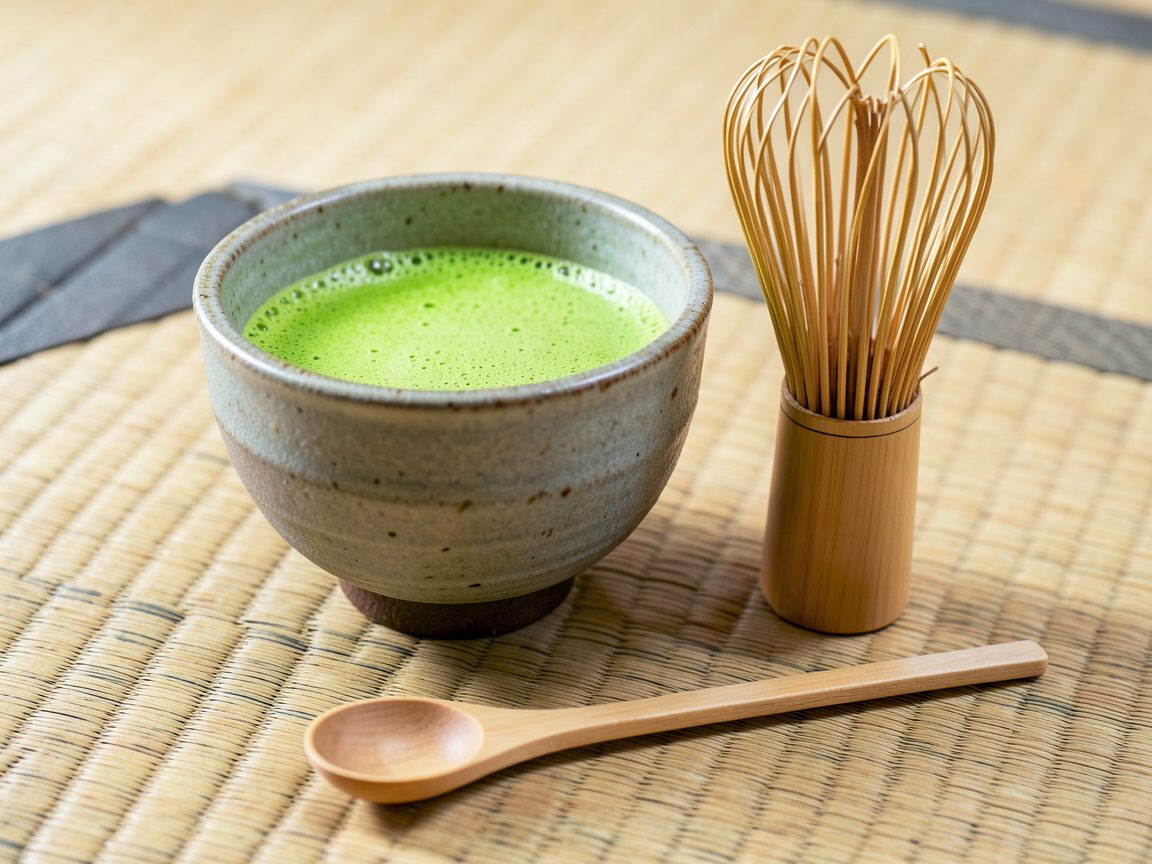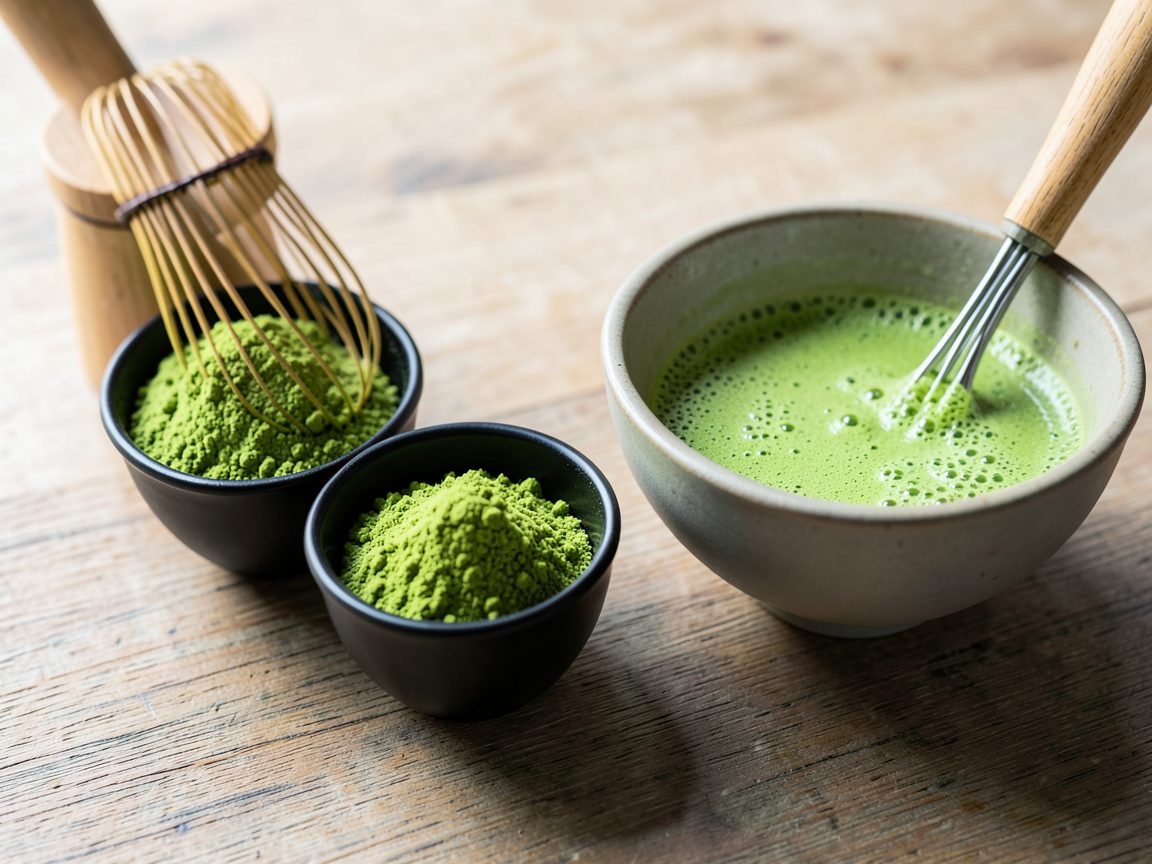
With most teas you steep the leaves and throw them away. With matcha you drink the leaf itself, ground into a fine powder and whisked into water.
This article is based on Wikipedia's article on matcha.
- What it is: finely ground shade-grown green tea
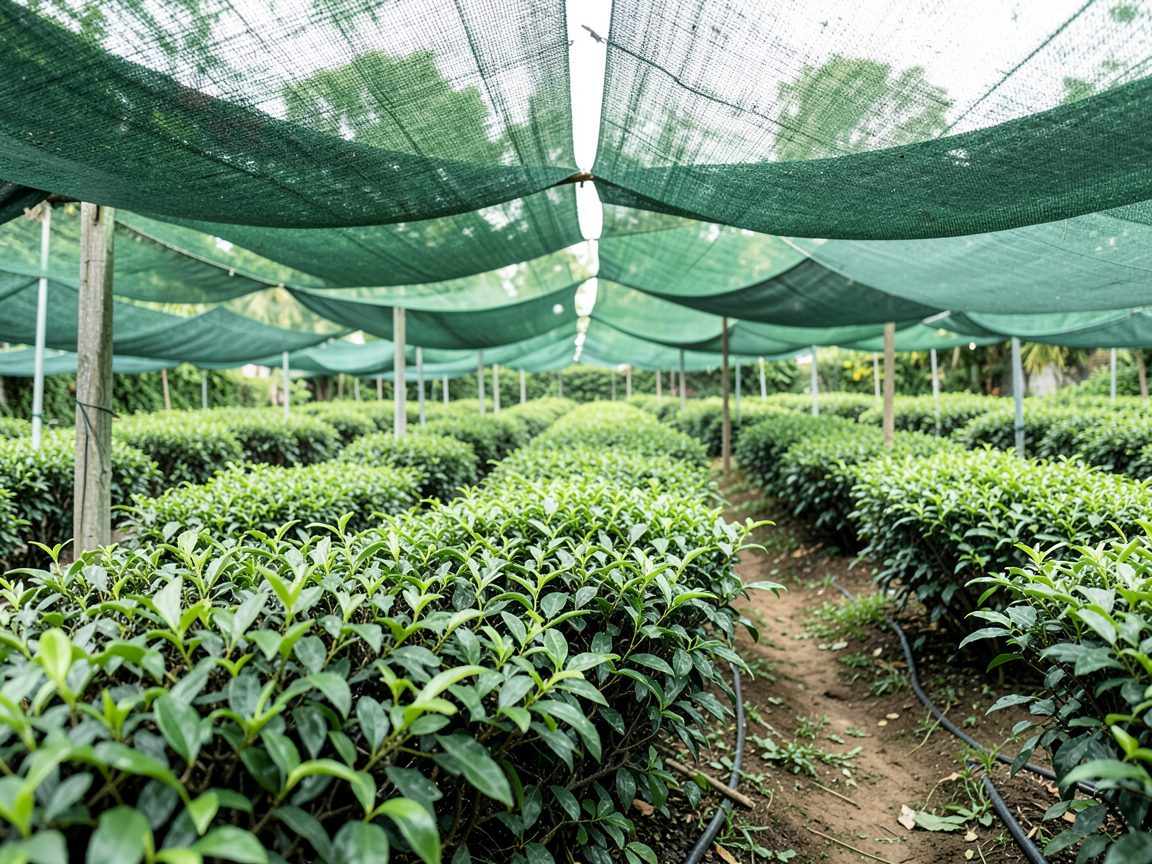
- Shading: 2–3 weeks before harvest (Japanese standard)
- Leaves before grinding: tencha
- Brought to Japan: by Eisai, around 1191
- Flavour: strong umami, linked to theanine
What is matcha?
Matcha is a finely ground powder of green tea specially processed from shade-grown tea leaves. Shade growing gives matcha its bright green colour and strong umami flavour. It is typically consumed suspended in hot water.
How matcha is defined
Wikipedia notes strict definitions from the International Organization for Standardization (ISO 20715:2023) and the Japanese food labelling standard. Both require that matcha be:
- made from Camellia sinensis var. sinensis (small-leaf tea);
- grown in the shade;
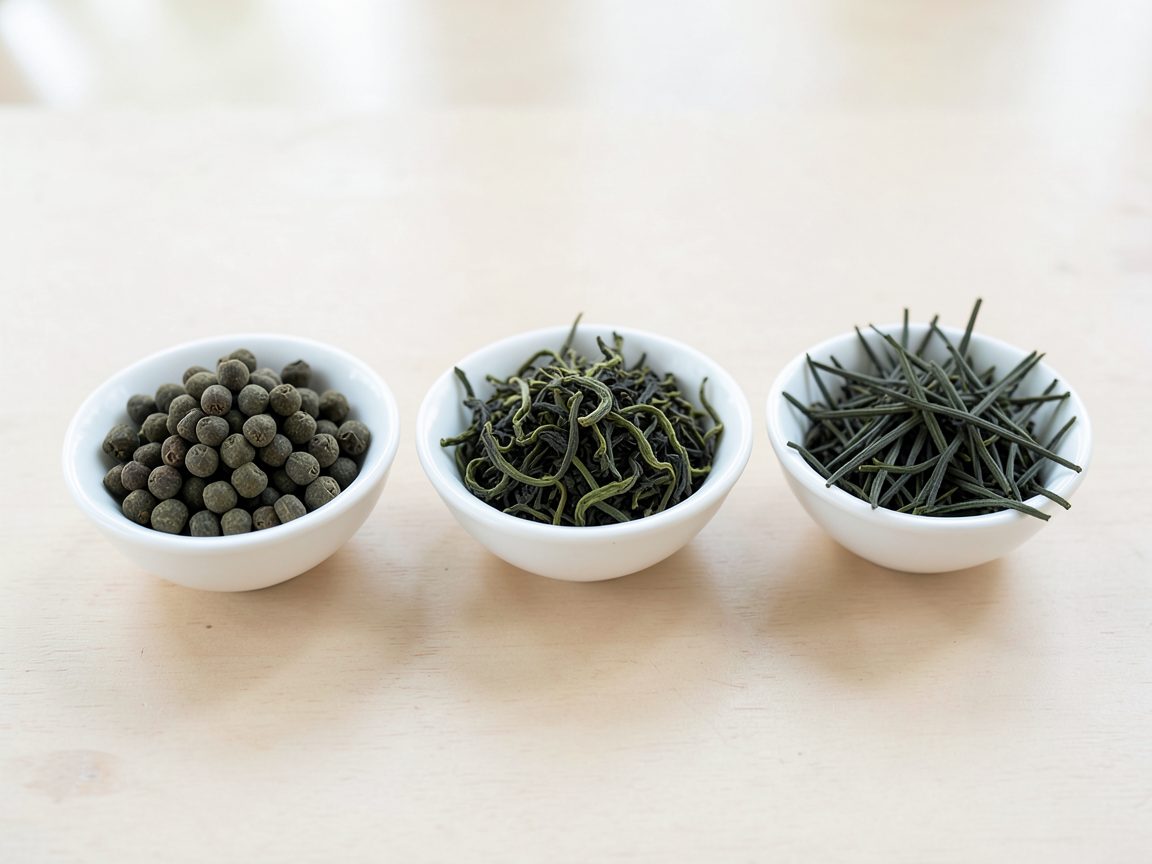
- steamed and dried without being rolled;
- ground to a fine powder.
The Japanese standard requires shading for 2–3 weeks before harvest. The processed leaves before grinding are called tencha. Wikipedia also notes that cheaper powdered teas made from unshaded leaves are sometimes sold as "matcha" even though they don't meet these definitions.
From China to Japan
- Powdered tea originated in China during the Tang dynasty (618–907).
- In the Song dynasty (960–1279), whisks and bowls were used to froth powdered tea.
- The monk Eisai introduced the method to Japan around 1191, where it continued to develop even as it declined in China.
- In the 16th century, Japanese tea farmers developed the shading techniques used to produce tencha, contributing to modern matcha's vivid colour and umami.
Umami and theanine
Wikipedia links matcha's rich umami flavour to theanine, an amino acid whose content increases when tea plants are shaded. Read more in L-Theanine: Tea's Amino Acid.
How matcha is used
Matcha is at the heart of the Japanese tea ceremony. It is also used to flavour and colour foods such as mochi, soba noodles, green tea ice cream, lattes and Japanese confectionery. Wikipedia notes that matcha used for food colouring is often coloured with additives rather than being expensive shade-grown matcha.
Shade-grown, steamed, unrolled and stone-fine: four things make a tea matcha.