In India, Sri Lanka and much of South and South-East Asia, moringa is a familiar tree. Its long seed pods — "drumsticks" — and its leaves have long been used as vegetables.
This article summarises what Wikipedia's article on Moringa oleifera and Food Standards Australia New Zealand report about the plant.
- Plant: Moringa oleifera, the "drumstick tree"
- Native to: northern India
- Name: from Tamil murungai, "twisted pod"
- Largest producer: India
- Australia: not currently permitted for retail sale as a food (FSANZ, Nov 2025)
What is moringa?
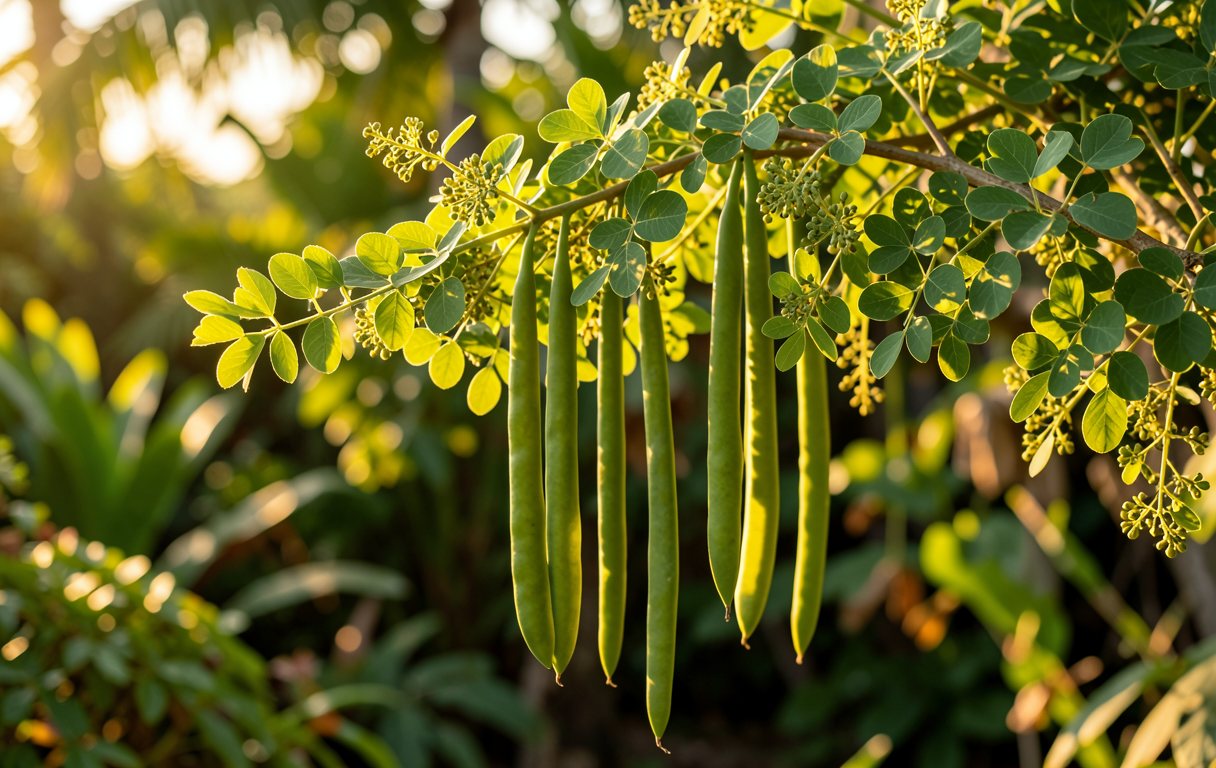
Moringa oleifera is a short-lived, fast-growing, drought-resistant tree native to northern India and used extensively in South and South-East Asia. Wikipedia lists common names including moringa, drumstick tree (from its long, slender, triangular seed pods), horseradish tree (from the taste of its roots) and malunggay.
- The genus name comes from the Tamil murungai, meaning "twisted pod".
- The tree can reach 10–12 m, with feathery foliage of tripinnate leaves and fragrant yellowish-white flowers.
- India is the largest producer, with Tamil Nadu leading in cultivation area.
Moringa in South Asian cooking
Wikipedia describes how the young pods, known as drumsticks, are a culinary vegetable in South Asia — cooked in curries and soups, in coconut-milk drumstick curries, and in dals and lentil soups such as sambar. The flowers are a springtime delicacy in Bengali cuisine.
Nutrients
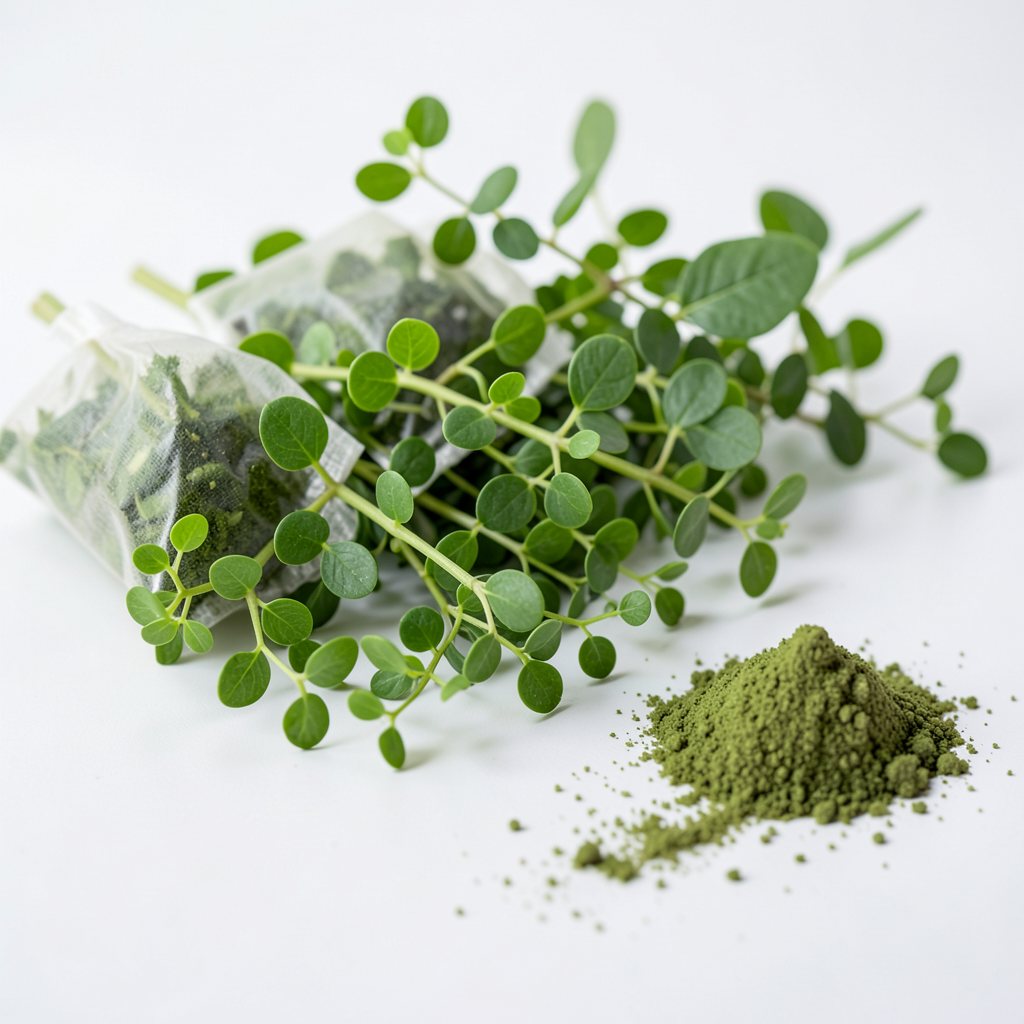
According to Wikipedia, the leaves are the most nutritious part of the plant, and a significant source of B vitamins, vitamin C, provitamin A (as beta-carotene), vitamin K, manganese and protein. Wikipedia also notes that some of the calcium in moringa leaves is bound as calcium oxalate crystals, with oxalate levels comparable to spinach.
Claims you may see online — such as moringa having "more iron than spinach" or "more calcium than milk" — are often based on comparing dried powder with fresh foods gram for gram, and should be treated with caution.
Safety and regulation
- Toxicity: Wikipedia notes that toxicity data in humans are limited, and that laboratory studies indicate compounds in the bark and roots may cause adverse effects when consumed in excess.
- Medicines: moringa may interfere with some prescription drugs, including those metabolised by cytochrome P450 enzymes (Wikipedia).
- Australia and New Zealand: FSANZ rejected an application to approve moringa leaf, pods and oil as a novel food in November 2025, finding that the available information was not sufficient to establish its safety. FSANZ states that moringa is not permitted as a food or food ingredient for retail sale. FSANZ notes that therapeutic products containing moringa are regulated separately by the Therapeutic Goods Administration.