Tea has been part of Chinese life for many centuries. Wikipedia's article on Chinese tea culture describes it as an integral part of traditional Chinese material and spiritual culture, which emerged in the Tang dynasty.
This article introduces a few key ideas, including the gongfu brewing method described in Wikipedia's gongfu tea article.
- Legendary discoverer: Shennong
- The Classic of Tea: Lu Yu, c. 760–762 CE
- Tea culture emerged: Tang dynasty
- Gongfu tea: "making tea with skill"
- Gongfu temperatures: about 80 °C green, 90 °C black
Legend and early history
Ancient Chinese sources credit Shennong, a mythical patron of medicine and agriculture, with discovering the effects of tea. Wikipedia's Japanese tea ceremony article notes that the earliest archaeological evidence of tea drinking in China dates to the 2nd century BCE.
Lu Yu and The Classic of Tea
Lu Yu's The Classic of Tea, written roughly between 760 and 762 CE, is a treatise on tea's cultivation and preparation (Wikipedia: Matcha; Wikipedia: Green tea). It describes tea pressed into cakes, roasted, ground and boiled — a very different drink from today's loose-leaf tea.
Influence on the world
Wikipedia notes that Chinese tea culture heavily influenced Japan and Korea, each developing its own form of tea ceremony, and that its cultivation, processing and teaware also influenced later tea cultures such as India, the United Kingdom and Russia. The English word "tea" itself traces back through Chinese dialects.
Gongfu tea
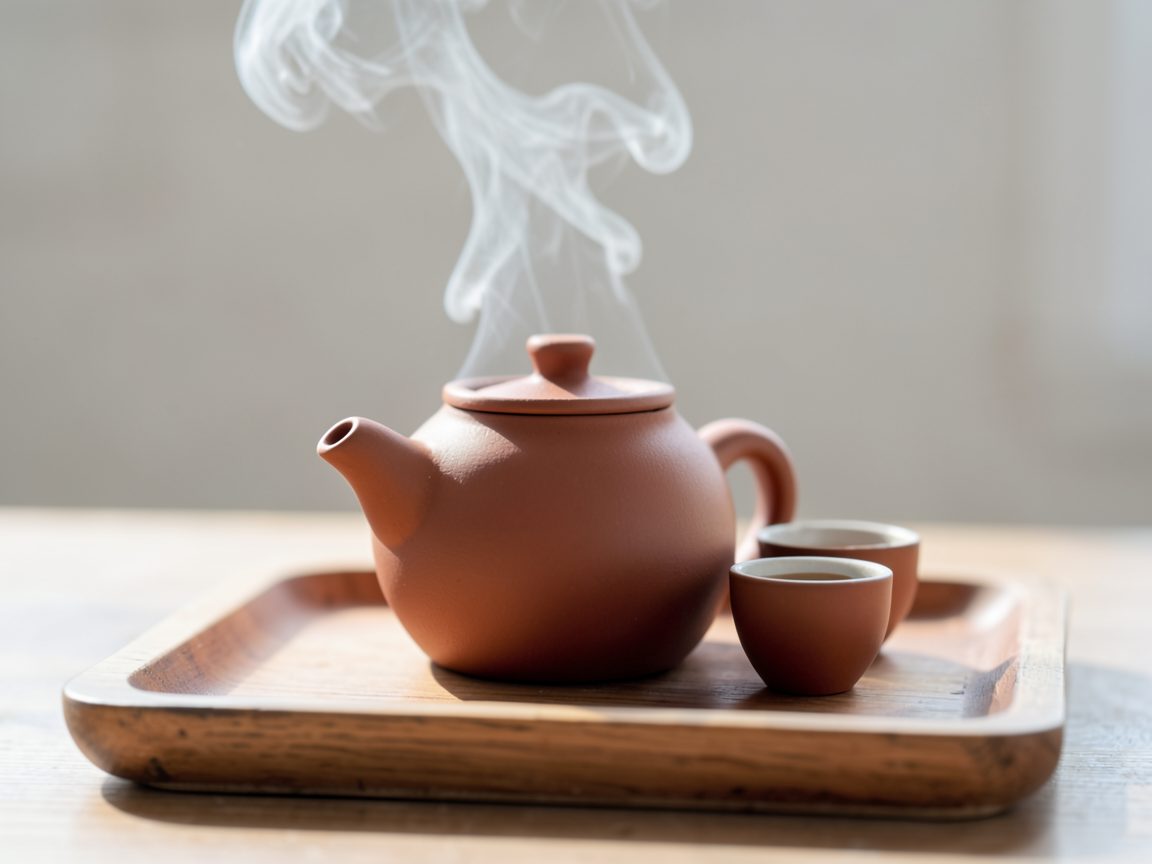
Gongfu tea (gōngfū chá) means "making tea with skill". Wikipedia notes it is sometimes called a "tea ceremony", but is more accurately a specialised brewing technique. It probably originated in Fujian and the Chaoshan area of eastern Guangdong, and it uses smaller brewing vessels and more tea leaf per volume of water than Western-style brewing.
Water
Wikipedia notes that water that tastes or smells bad will spoil the tea, while distilled or extremely soft water lacks minerals and can give a "flat" brew. Tea masters generally prefer good, clean spring water and avoid water with very high mineral content.
Temperature guidelines
| Tea | Range | Typical |
|---|---|---|
| Green | 70–85 °C | 80 °C |
| White | 75–90 °C | 85 °C |
| Oolong | 80–90 °C | 85 °C |
| Black | 90–95 °C | 90 °C |
| Dark & pu'er | 95–100 °C | 99 °C |
Source: Wikipedia, Gongfu tea. Other traditions use different temperatures — for example, Ceylon black tea packs commonly specify boiling water.