Ceylon's tea industry was born from a crisis. In the mid-19th century the island was a coffee powerhouse — until a fungus called coffee leaf rust destroyed it.
This article draws on Wikipedia's articles on coffee production in Sri Lanka, Hemileia vastatrix and the history of tea, and the Sri Lanka Tea Board's Birth of Ceylon Tea.
- Fungus: Hemileia vastatrix (coffee leaf rust)
- Struck Ceylon: from 1869
- Planters' nickname: "Devastating Emily"
- Coffee area by 1900: about 4,610 ha
- Coffee production fell: by 95% (Wikipedia)
The coffee boom
- The Dutch experimented with coffee in the 18th century without much success.
- The British began large-scale commercial production after the reforms of 1833. The first plantation in the mountainous Kandyan area was established in 1827.
- Around 100,000 hectares of rainforest were cleared for coffee; the term "coffee rush" was coined in 1840.
- By 1860, Sri Lanka, Brazil and Indonesia were the world's three largest coffee producers.
- Coffee cultivation peaked in 1870 at over 111,400 hectares.
Wikipedia also records that Tamil labour from South India was recruited from the 1830s to work the plantations — see The Communities Behind Ceylon Tea.
The rust arrives
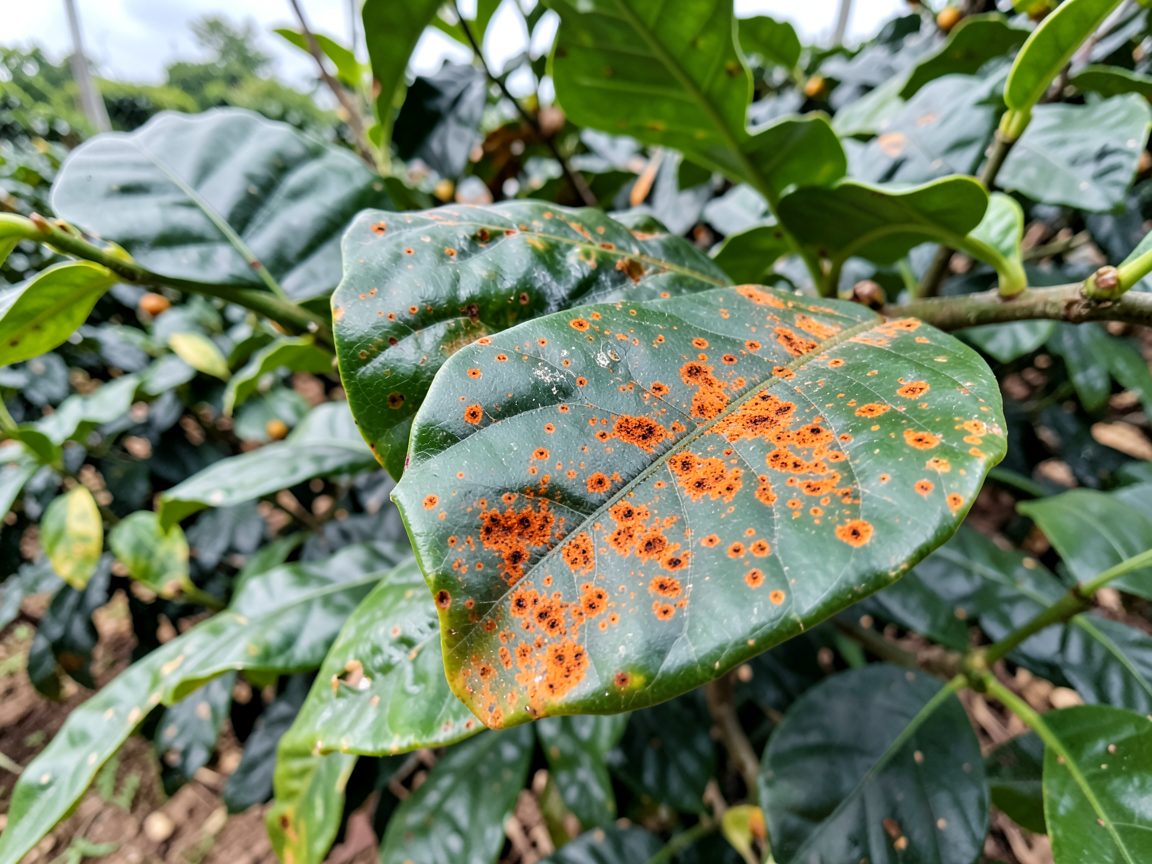
Hemileia vastatrix is a fungus that causes coffee leaf rust. It covers leaves with spores and causes them to drop, reducing the plant's ability to photosynthesise. Wikipedia describes it as one of the most economically important coffee diseases worldwide; past epidemics have destroyed the coffee production of entire countries.
In 1869 Ceylon's coffee industry was still thriving, but shortly afterwards plantations were devastated. Planters nicknamed the disease "Devastating Emily". Wikipedia's history of tea article states that the fungus reduced Ceylon's coffee production by 95%; by 1900 coffee was cultivated on only about 4,610 hectares.
A colony in crisis
The Tea Board describes the early 1880s as "a lean time in Ceylon": plantations were sold cheaply, there were runs on banks in Colombo, and experiments with indigo and cinchona failed.
Tea takes over
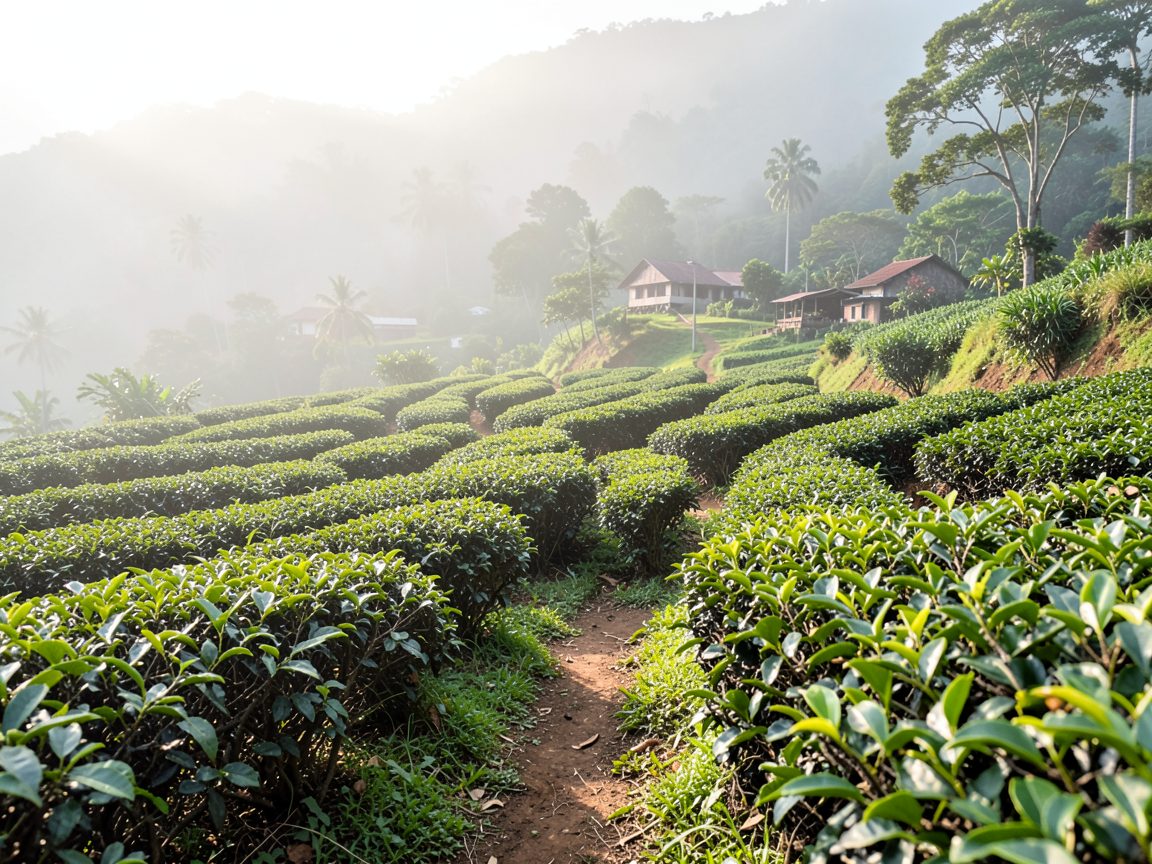
Meanwhile, James Taylor had already planted tea at Loolecondera in 1867 (see James Taylor & Loolecondera). As coffee failed, planters turned to tea. The Tea Board notes that more than 120,000 hectares had to be stripped of dead coffee bushes and replanted, and quotes Sir Arthur Conan Doyle's tribute in his story "De Profundis" that the tea fields of Ceylon are "as true a monument to courage as is the lion at Waterloo".
A fungus ended Ceylon's coffee era — and opened the way for Ceylon tea.
Coffee in Sri Lanka today
Coffee never disappeared completely. Wikipedia notes that Sri Lankan coffee production is seeing signs of revival, with more cafés sourcing local beans since 2014.