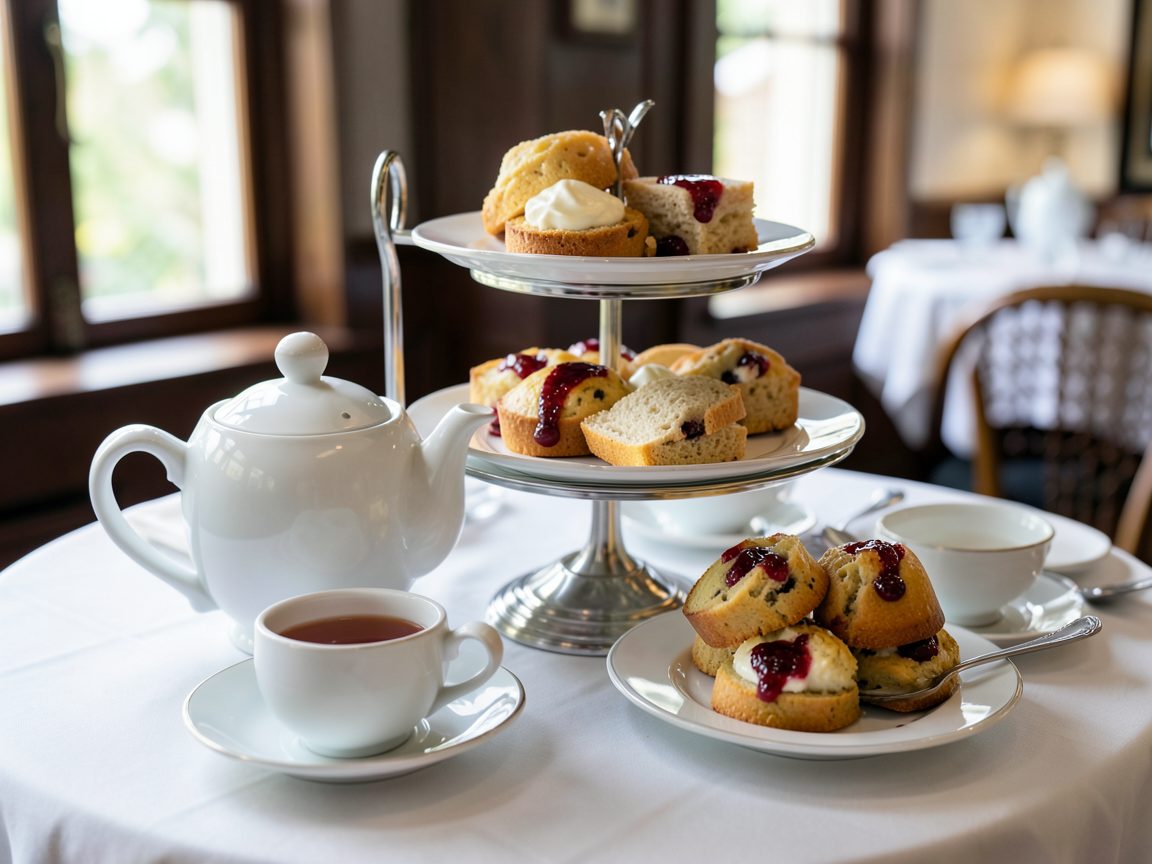
Afternoon tea — tea with cakes, scones and sandwiches in the mid-afternoon — is one of Britain's best-known customs, and it travelled with British settlers to Australia.
This article draws on Wikipedia's articles on tea as a meal, tea in the United Kingdom and tea in Australia.
- "Five o'clock tea": mentioned by Madame de Sévigné
- Popularised: 1830s–1840s, often credited to Anna Russell, Duchess of Bedford
- Spread to middle class: 1860s–1870s
- High tea: a heartier working-class meal
- Australia: morning and afternoon tea, inherited from Britain
What is afternoon tea?
Wikipedia describes "tea" as an umbrella term for several meals. The most common elements of afternoon tea are the drink itself and baked goods such as cakes, scones and bread and jam, and perhaps sandwiches — the pillars of the "traditional afternoon tea" offered by London hotels.
Origins
- The custom of drinking tea in the afternoon may date from the late 17th century, but tea as a meal is a later invention of the late 18th or early 19th century.
- An early French reference is Madame de Sévigné's thé de cinq heures ("five o'clock tea").
- The term "afternoon tea" appears in Alexander Carlyle's autobiography, describing the ladies of Harrogate in 1763.
The Duchess of Bedford
Anna Russell, Duchess of Bedford, is commonly cited as the originator of afternoon tea. The story goes that in the 1830s or 1840s she asked for tea and snacks to be sent to her room between lunch and a late dinner, then turned the habit into a social occasion.
Wikipedia notes her role is a matter of controversy: one view is that afternoon tea predates her, while another is that she codified an informal custom into a defined etiquette. As a Lady of the Bedchamber to Queen Victoria, she was well placed to set trends.
Afternoon tea vs high tea
| Afternoon ("low") tea | High tea | |
|---|---|---|
| Who | Upper and middle classes | The working class |
| What | Light: cakes, scones, sandwiches | Heartier meal |
| Spread | To the middle class by the 1860s–1870s | Emerged from changing working habits |
Wikipedia notes that by the end of the 19th century, tea as a meal had become established across all social classes.
The Victoria sponge
Wikipedia's tea in the UK article records that Queen Victoria enjoyed sponge cake with her afternoon tea; after Alfred Bird invented baking powder in 1843, the Victoria sponge was created and named after her.
Afternoon tea in Australia
According to Wikipedia, tea was aboard the First Fleet in 1788, and Australians have "afternoon tea and morning tea much the way the British do". Small food portions are often served at morning and afternoon tea, and the main evening meal can also be called "tea".
From a duchess's room to the Australian morning-tea break — tea as a meal has travelled far.