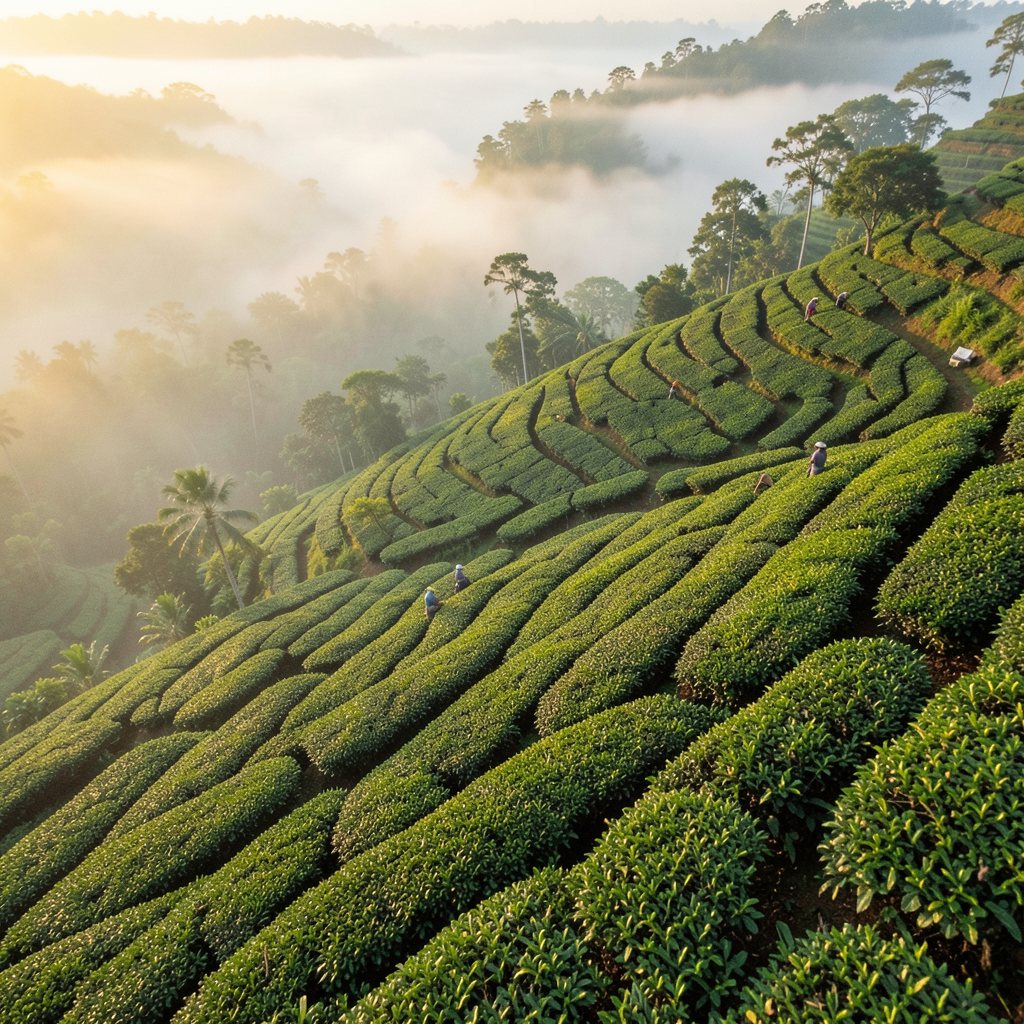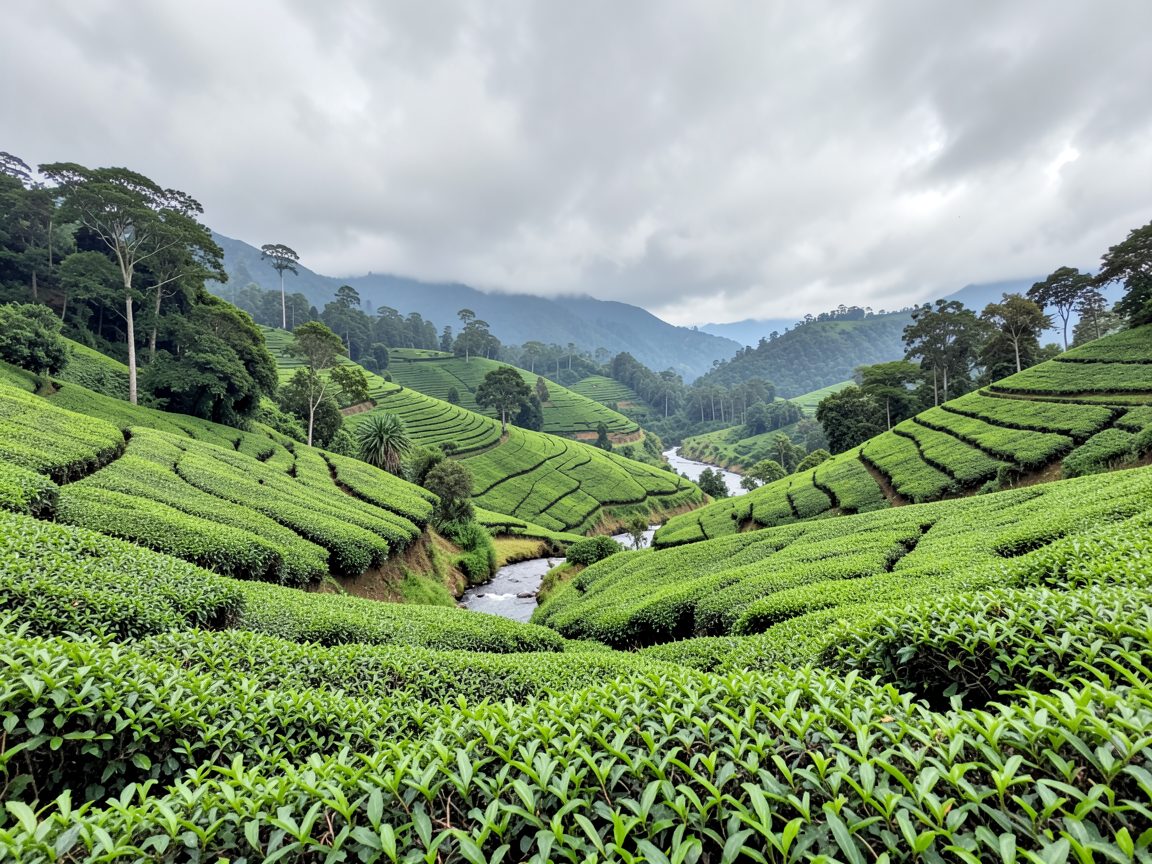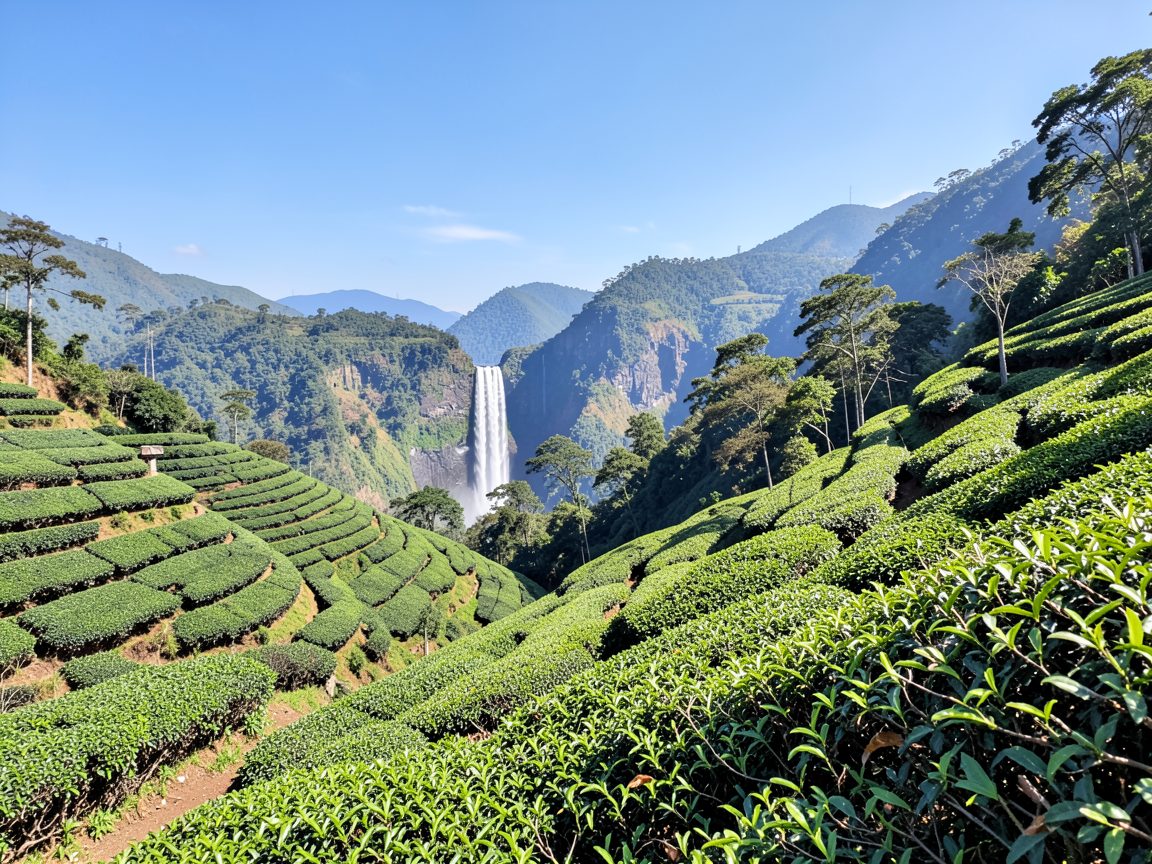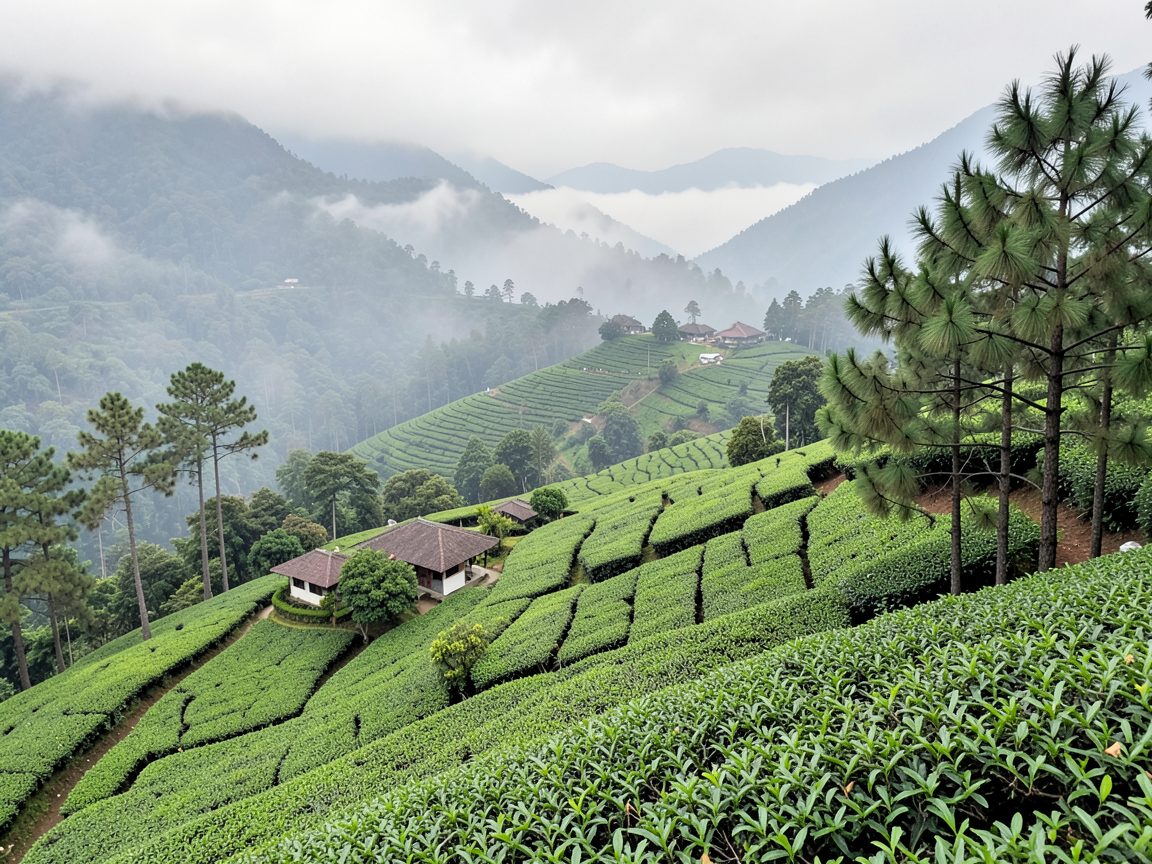
Nuwara Eliya is Sri Lanka's highest tea-growing region. The Sri Lanka Tea Board calls it the "champagne province" of the country's tea lands.
This article draws on the Tea Board's Tea Diversity page and Wikipedia's article on Nuwara Eliya.
- Town altitude: 1,868 m (6,128 ft)
- Tea lands: rise over 6,000 ft (Tea Board)
- Climate: coolest area of Sri Lanka; mean 16 °C
- Tea: "the lightest and the most refined" (Tea Board)
- Best taken: light
The place
- Nuwara Eliya is a city in the hill country of Sri Lanka's Central Province, at an altitude of 1,868 m (6,128 ft).
- Its name means "city on the plain (table land)" or "city of light".
- It is overlooked by Pidurutalagala, Sri Lanka's tallest mountain.
- Wikipedia describes it as the most important location for tea production in Sri Lanka.
Climate
Wikipedia notes that Nuwara Eliya has a subtropical highland climate, with a mean annual temperature of 16 °C — the coolest area in Sri Lanka. In the winter months there can be frost at night. The Tea Board describes mountains that "soar over 6000 feet above sea level, where the morning air is cool and bracing and the nights cold and touched with frost".
The tea
The Tea Board says this climate produces "the lightest and the most refined" Ceylon teas, with flowery pekoes "best imbibed light". Wikipedia's article on tea production in Sri Lanka notes there are "plenty of bidders worldwide for its specialty high-country-grown Nuwara Eliya teas".
Light, refined and best drunk without heavy milk — that's how the Tea Board describes Nuwara Eliya tea.
A little history
According to Wikipedia, the city was founded by the explorer Samuel Baker in 1846. Its cool climate made it a retreat for British civil servants and planters, earning it the nickname "Little England". The Tea Board records that in 1884 the Central Tea Factory was built on the Fairyland Estate (Pedro) in Nuwara Eliya.
Brewing high-grown tea
Because the Tea Board describes these teas as best taken light, try a shorter steep and taste before adding milk. General guidance is in How to Brew the Perfect Cup.